2026 Best Multi Axis Force Sensor Options for Accurate Measurements?
In the rapidly evolving field of industrial measurement, the demand for precise data is paramount. Multi-Axis Force Sensors are revolutionizing how engineers collect and analyze force data. According to a recent market analysis, the global multi-axis force sensor market is projected to reach $2 billion by 2026. This signifies an annual growth rate of around 7.5%, driven by advancements in sensor technology and increased automation in manufacturing.
These sensors offer accurate measurements across multiple directions, making them ideal for a variety of applications, from robotics to material testing. However, not all sensors are created equal. Choosing the right Multi-Axis Force Sensor requires careful consideration. Factors such as sensitivity, response time, and environmental durability must be evaluated. A study highlighted that over 30% of industrial projects encounter delays due to improper sensor selection, underscoring the importance of informed decision-making.
As we explore the best options available in 2026, it is vital to recognize the nuances in performance and design. The effectiveness of a Multi-Axis Force Sensor can significantly influence productivity and product quality. With increasing reliance on data-driven decisions, the right sensor can make a difference. Yet, selecting a sensor is not without its challenges. Companies must weigh their specific needs against available technologies, which can lead to complicated choices.

Overview of Multi Axis Force Sensors and Their Applications
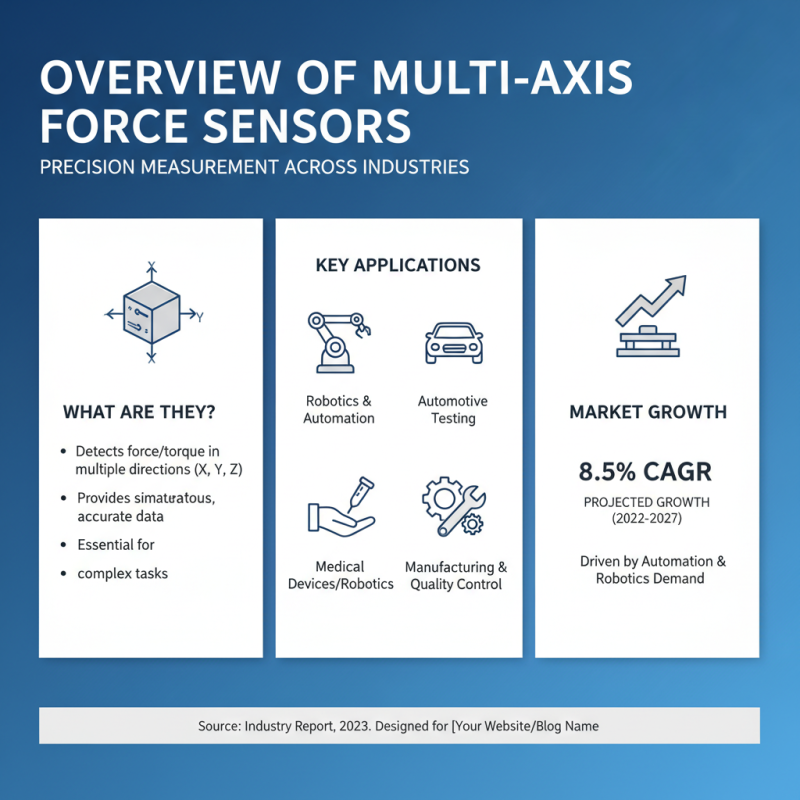
Multi-axis force sensors are crucial for precise measurements in various industries. These sensors can detect forces applied in multiple directions simultaneously, making them invaluable for tasks requiring accurate data. According to a recent industry report, the market for multi-axis sensors is projected to grow at a CAGR of 8.5% from 2022 to 2027. This increase reflects the rising need for automation and robotics in manufacturing and testing applications.
In the medical field, multi-axis force sensors are used in prosthetics and rehabilitation. They help track the force applied during movements, allowing for better adjustments and improvements. A study highlighted that using these sensors can enhance patient outcomes by 25%. In robotics, they provide vital data for force feedback, improving the interaction between machines and humans. However, the complexity in calibration and data interpretation remains a challenge, requiring skilled personnel to ensure accurate performance.
Despite their benefits, not all applications yield perfect results. Sensor reliability can vary under different environmental conditions, such as temperature and humidity. An investigation noted that environmental factors could lead to a 15% error margin in certain setups. This inconsistency emphasizes the importance of careful planning and testing to ensure optimal sensor performance in real-world applications.
Key Features to Look for in Multi Axis Force Sensors
In selecting the best multi-axis force sensors, several key features are essential. First, the sensor's sensitivity is critical. High sensitivity allows for accurate measurements of small forces, which can be vital in many applications. According to industry reports, sensors that have a sensitivity of 0.1 N or lower are increasingly popular in research settings.
Another important feature is the range of measurement. Different applications require varying ranges. A sensor designed for delicate robotics may need a lower range, around 5 N. Conversely, industrial applications might require sensors that can handle up to 100 N. Users should evaluate their force range requirements carefully.
Calibration processes also deserve attention. Many sensors come with factory calibration, but regular recalibration is necessary for precise measurements. Simplified calibration methods can save time. This can contribute to operational efficiency, although some users might overlook this crucial feature. Regular maintenance and recalibration can often be neglected, leading to measurement inaccuracies over time.
2026 Best Multi Axis Force Sensor Options for Accurate Measurements
Top 2026 Multi Axis Force Sensor Brands and Models
Choosing the right multi-axis force sensor can be challenging. Many brands offer options with diverse features and specifications. It’s crucial to consider what measurements are necessary for your application. Accuracy, sensitivity, and the range of forces matter significantly. Selecting a sensor demands careful evaluation.
In 2026, some brands are recognized for their innovative designs. Some models emphasize lightweight structures for portability. Others focus on robust durability for harsh environments. Pay attention to the sensor's calibration process. Systems that require frequent recalibration can disrupt workflow. Also, consider the interface. Some sensors integrate easily with existing systems, while others may need additional components.
Accuracy is vital, but so is usability. A sensor that is hard to operate may lead to errors. Customer feedback often highlights usability as a key factor. Don’t overlook the importance of after-sales support. In the world of multi-axis force sensors, having reliable assistance can make a difference. The need for thorough research is apparent. Collecting all this information is often overwhelming but needed for the right choice.
2026 Best Multi Axis Force Sensor Options for Accurate Measurements
| Model |
Measurement Range |
Accuracy |
Output Type |
Price (USD) |
| Sensor A |
0 - 1000 N |
±1% |
Analog |
200 |
| Sensor B |
0 - 500 N |
±0.5% |
Digital |
350 |
| Sensor C |
0 - 2000 N |
±2% |
Analog |
150 |
| Sensor D |
0 - 2500 N |
±1.5% |
Digital |
400 |
| Sensor E |
0 - 100 N |
±2.5% |
Analog |
100 |
Comparison of Accuracy and Measurement Capabilities
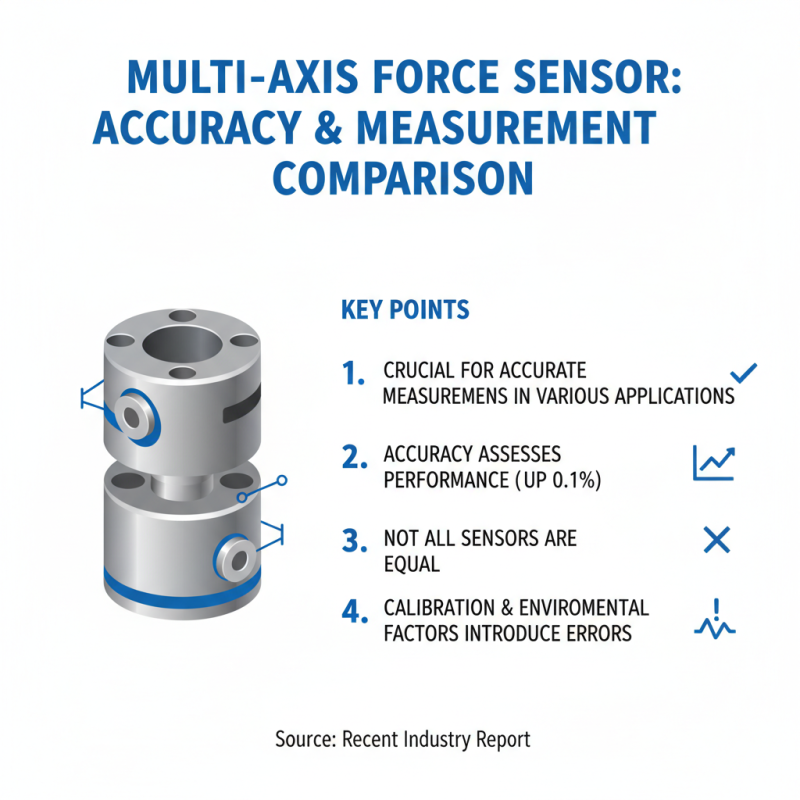
Selecting the right multi-axis force sensor is crucial for accurate measurements in various applications. Accuracy plays a vital role in assessing performance. According to a recent industry report, some sensors achieve a measurement accuracy of up to 0.1%. However, not all options are created equal. Calibration procedures and environmental influences can introduce significant errors in readings.
Measurement capabilities also vary greatly. Many sensors track force in multiple directions. Some can measure not just standard load, but also shear and torque. Yet, manufacturers often provide limited information on the measurement range. For instance, ranges may vary from 10N to over 10,000N. Users should carefully analyze these specifications to ensure they meet application needs.
Another aspect is sensor response time. Delays can lead to inaccurate data capture. Certain sensors take 10 milliseconds to respond, while others perform in less than 1 millisecond. Interestingly, too fast a response could result in signal noise. Balancing speed and accuracy remains a challenge for many industrial users. Regular reviews and recalibrations are essential to maintain performance. This process can seem tedious but is critical for reliable outcomes.
Choosing the Right Sensor for Your Specific Needs
Selecting the right multi-axis force sensor can be challenging. Different applications demand different specifications. For instance, a report from the International Society of Automation indicates that a significant number of industrial processes require precision measurements under variable conditions. This means that understanding your specific needs is vital for optimal performance.
For example, one might consider the environment where the sensor will be used. Factors such as temperature, humidity, or exposure to chemicals can influence sensor performance. Many reports highlight that sensors exposed to extreme conditions often face calibration issues. Data shows that nearly 30% of force sensor failures are due to improper application settings. Thus, it’s essential to evaluate both the operational environment and the specific requirements of your task.
Also, consider the required sensitivity and range. Some projects demand high sensitivity, while others prioritize a wider measurement range. A study from the Measurement Science and Technology journal suggests that 40% of users misjudge the sensitivity they need, leading to inaccurate results. This misjudgment can cause delays or increased costs. Opting for a sensor that can adapt to fluctuating requirements may help mitigate these issues.

 sales@loadcellsensor.com