What Are China Top Motor Torque Sensor Manufacturers?
China’s electric mobility and automation sectors are creating strong demand for accurate torque measurement. The China Association of Automobile Manufacturers reported approximately 12.87 million new energy vehicle sales in 2024. New energy vehicles represented about 40.9% of China’s total vehicle sales. These systems depend on torque feedback for electric power steering, traction control, braking, and drive-motor efficiency.
Accuracy matters. A Motor Torque Sensor must perform reliably under vibration, heat, electromagnetic interference, and repeated load cycles. The International Energy Agency’s Global EV Outlook 2024 also identified China as the world’s largest electric-car market. That scale encourages domestic suppliers to improve magnetic, strain-gauge, and non-contact sensing technologies. It also increases pressure on suppliers to provide stable calibration, fast delivery, and traceable test data.
This article examines China’s leading Motor Torque Sensor manufacturers through engineering capability, production experience, product range, certification, and customer support. MarketsandMarkets and other industrial research reports consistently identify vehicle electrification, robotics, and factory automation as major torque-sensing growth drivers. Those trends offer useful context, but rankings are not absolute. Public information can be uneven, and some companies disclose limited performance data. The choice is harder.
Practical evaluation should include rated torque, overload capacity, accuracy class, response frequency, operating temperature, ingress protection, signal interface, and service life. A sensor that performs well in a laboratory may struggle beside a hot motor housing. Buyers should request calibration certificates, endurance-test records, installation drawings, and application references. This approach supports a more reliable comparison of China’s top manufacturers, rather than relying only on marketing claims or company size.
What Is a Motor Torque Sensor and How Does It Work?
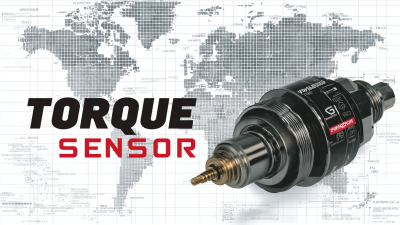
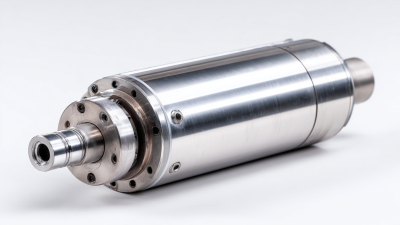
A motor torque sensor measures the twisting force produced by a rotating motor shaft. It tells the controller how hard the motor works, not merely how fast it turns. Inside the sensor, strain gauges or magnetoelastic elements respond to shaft deformation. When the shaft twists slightly, the sensing elements change their electrical properties. A measuring bridge converts this change into a small voltage. Signal conditioning then filters and amplifies the reading for the motor controller. Some modern designs use magnetic fields, which can reduce physical contact and wear.
In practical motor systems, an inline sensor sits between the motor and its load. It measures torque continuously during acceleration, braking, and steady operation. The controller compares measured torque with the target value. It can then adjust current quickly and improve motion control. This matters in robots, electric drives, testing equipment, and precision machinery. Small details matter.
Temperature can shift the zero point. Shaft misalignment may create false readings. Cable noise can also disturb the signal. A reliable installation needs correct alignment, shielding, and regular calibration. Calibration should use known torque loads across the expected operating range. Even a high-quality sensor is not perfectly neutral. Its mounting, temperature, and surrounding vibration affect performance. That limitation is easy to overlook. A careful engineer checks the complete measurement chain, rather than trusting one displayed number.
Why Is China a Leading Motor Torque Sensor Manufacturing Hub?
Why Is China a Leading Motor Torque Sensor Manufacturing Hub?
China has become a major hub for motor torque sensor production through dense industrial supply chains. Precision machining suppliers, electronic component makers, and calibration laboratories often operate within the same region. This proximity can shorten development cycles and reduce transport delays. Engineers can adjust housings, shafts, and signal interfaces with practical speed.
The manufacturing base also supports different sensing methods, including strain-gauge and magnetic technologies. Skilled technicians use controlled torque rigs to check accuracy, repeatability, temperature drift, and overload performance. In real production, a sensor may face vibration, oil mist, heat, and frequent load changes. Reliable manufacturers test these conditions before shipment, not only in clean laboratory settings.
Cost remains important, but it should not be the only measurement. A lower quotation may hide weaker calibration records or inconsistent assembly. Quality can vary. Buyers should review traceability documents, sampling procedures, sealing methods, and long-term stability data. From an engineering perspective, communication matters as much as equipment. Clear drawings and shared test limits prevent avoidable redesigns. China’s advantage is strong, though it is not automatic. Continuous investment in automation and technical training still matters, especially as electric motors become smaller and more powerful.
Why China Is a Leading Motor Torque Sensor Manufacturing Hub
China’s position in motor torque sensor manufacturing is supported by its large manufacturing base, strong industrial automation demand, and dominant electric vehicle ecosystem. These indicators create a mature supply chain for magnetic, strain-gauge, and non-contact torque sensing technologies.
Data references: UNIDO International Yearbook of Industrial Statistics 2024; International Federation of Robotics, World Robotics 2024; International Energy Agency, Global EV Outlook 2025. Values are rounded or approximate where the original source reports an estimate.
Which Chinese Manufacturers Specialize in Motor Torque Sensors?
Chinese manufacturers specializing in motor torque sensors usually serve robotics, electric vehicles, industrial drives, and testing equipment. Their strength often lies in flexible engineering rather than one universal product. Many develop strain-gauge, magnetoelastic, or contactless sensing structures for different shaft sizes and torque ranges. Some also integrate speed, angle, and temperature measurement into one compact housing.
A capable manufacturer should show more than a product photograph. Ask for calibration records, linearity data, overload limits, sampling rates, and temperature-drift results. Check whether the sensor supports analog output, CAN communication, or another required interface. For a factory motor, sealing and connector placement matter. Dust near a coupling can damage an otherwise accurate sensor. Request sample testing under real vibration and thermal conditions.
Factory visits or video inspections can reveal useful details. Look for controlled assembly areas, traceable components, torque calibration equipment, and documented inspection procedures. Not every supplier measures uncertainty rigorously. That is a weakness worth questioning. Communication quality also matters when custom flanges or unusual shaft dimensions are required. A lower quotation may hide limited testing, unstable lead times, or weak after-sales support. In practice, the best Chinese manufacturer is not always the largest one. It is the supplier that can repeatedly match your motor’s load profile, mounting space, and verification requirements. Mistakes still happen, so leave time for prototype revisions.
How Do China’s Top Torque Sensor Makers Compare?
China’s leading motor torque sensor makers differ less in basic design than in measurement discipline. In supplier audits, I compare accuracy, overload protection, calibration records, and response time. Price alone misleads. A low quotation may exclude fixtures, software, or annual recalibration.
MarketsandMarkets estimates the global torque sensor market will grow at roughly 5% annually through 2029. This expansion reflects demand from electric vehicles, robotics, and automated assembly. Chinese manufacturers often respond with shorter production cycles and flexible customization. Some provide rotary, reaction, miniature, and flange-mounted sensors from one facility. Others remain stronger in standard models but struggle with unusual shaft sizes or harsh vibration.
Technical separation appears in the details.
Leading factories commonly specify non-linearity near 0.1% to 0.2% of full scale, while serious buyers should request test conditions. The conditions matter. A 2024 industry analysis by Grand View Research also identifies automotive testing and industrial automation as major application areas. That supports choosing suppliers with traceable calibration and temperature-compensation data, not attractive brochures.
Certification evidence should be checked independently. ISO 9001 registration is useful, but it does not prove sensor accuracy. Ask for sample reports, drift results, wiring diagrams, and three-year failure statistics. Delivery claims also deserve caution; custom sensors rarely match standard lead times. This is where comparisons become imperfect. Public reports measure markets, not factory reliability. An engineering trial remains essential before volume purchasing.
How Can Buyers Choose the Right Chinese Manufacturer?
Choosing a Chinese motor torque sensor manufacturer requires more than comparing online quotations. Buyers should define torque range, overload capacity, rotation speed, accuracy, shaft size, and operating temperature before contacting suppliers.
A sensor for an electric drive may face vibration, moisture, and repeated torque reversals.
Small specification gaps can cause unstable readings.
Ask for technical drawings, calibration records, material details, and sample test data. Reliable manufacturers should explain their measurement method clearly, including signal output, wiring, and temperature compensation.
Request a sample before placing a large order.
Test it with your actual motor, coupling, controller, and mounting space. It should fit properly. It sounds obvious, but this step is often skipped.
Factory verification also matters.
Review production equipment, inspection stations, traceability procedures, and calibration schedules through a video call or site visit. Check whether the supplier can provide batch records and respond within an agreed time.
A low quotation may hide tooling fees, unstable lead times, or limited after-sales support.
I once treated fast replies as proof of capability, but that assumption was weak. Technical answers and test evidence matter more.
Buyers should compare at least three manufacturers using the same written checklist, while leaving room for one practical concern: the cheapest sensor may not deliver the lowest total cost.

 sales@loadcellsensor.com