What is Chlortetracycline Premix and Its Uses?
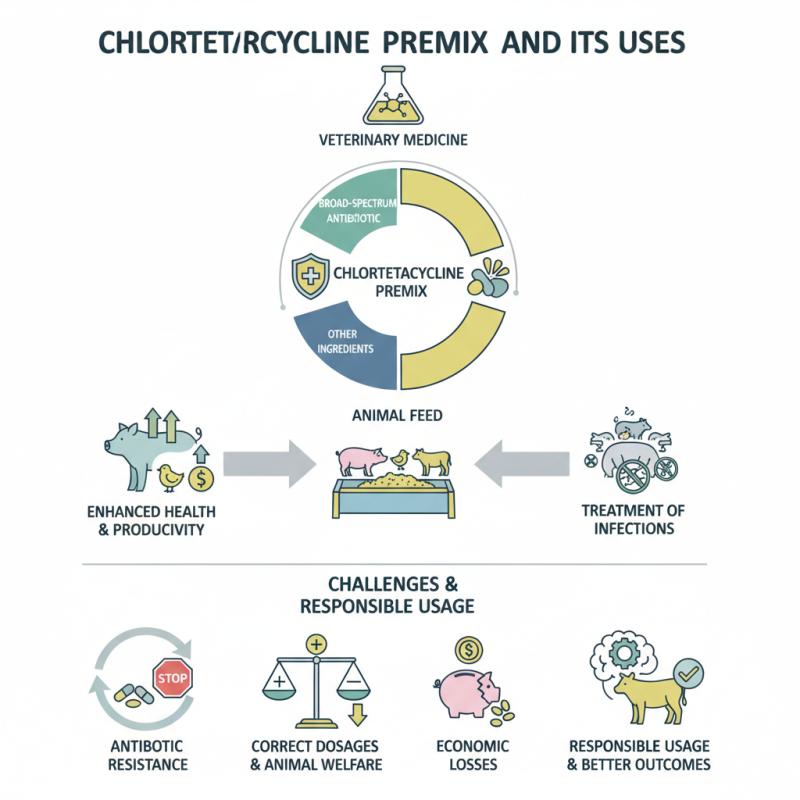
chlortetracycline premix is a vital compound in veterinary medicine. It combines chlortetracycline, a broad-spectrum antibiotic, with other ingredients. This mixture is designed for animal feed, enhancing health and productivity.
Farmers often use chlortetracycline premix to treat infections in livestock. It helps control diseases caused by bacteria. Its application can improve growth rates and feed efficiency, which are essential for profitable farming. However, some challenges arise with antibiotic use, including resistance. This issue requires careful consideration and management.
Moreover, the impact of using chlortetracycline premix on animal welfare is significant. Ensuring correct dosages is crucial. Overspending on antibiotics can lead to health issues in animals and economic losses for farmers. Reflecting on these aspects is necessary for responsible usage and better outcomes in animal husbandry.
What is Chlortetracycline Premix?
Chlortetracycline premix is a versatile antibiotic used in animal feed. It belongs to the tetracycline family. This compound combats infections in livestock and poultry. The primary goal is to enhance animal health and growth.
In production, chlortetracycline premix is often blended into feed. This ensures that animals receive the right dosage daily. Farmers may rely too much on this supplement. Overuse can lead to antibiotic resistance. It is crucial to monitor its application carefully. Balancing healthcare and responsible usage is necessary.
Many producers appreciate the efficiency it brings. However, some raise concerns about long-term effects. Observing animal behavior can offer insights. Are they showing signs of discomfort or illness? Reflection on these questions is important for improvement. Ultimately, responsible use can lead to healthier livestock and better yields.
Composition and Formulation of Chlortetracycline Premix
Chlortetracycline premix is a blend that contains the antibiotic chlortetracycline. This formulation often appears as a powder or granule. It is primarily mixed with animal feed to ensure proper dosage. The premix enables easy incorporation into diets for livestock and poultry. This approach helps in disease prevention and growth promotion in various animals.
The composition of chlortetracycline premix usually involves the active ingredient, chlortetracycline hydrochloride, and several carriers. These carriers enhance the stability and effectiveness of the active ingredient. Common carriers include silica, starch, or various vegetable powders. The formulation aims to maintain the stability of the antibiotic during storage and use. However, achieving the right balance is not always straightforward. The variability in feed formulations can affect the distribution of chlortetracycline.
Formulation must also consider regulatory guidelines. Challenges arise due to variations in feed ingredients. These differences can impact the final concentration of chlortetracycline in the diet. The complex nature of animal diets often raises questions about efficacy and safety. Manufacturers must continually refine approaches to ensure consistent quality. These reflections underline the importance of ongoing research and quality control.
Mechanism of Action of Chlortetracycline Premix
Chlortetracycline premix is an antibiotic commonly used in animal health. Its mechanism of action is crucial for understanding its efficacy. This drug inhibits bacterial protein synthesis by binding to the 30S ribosomal subunit. When bacteria cannot produce proteins, they cannot grow or divide effectively. This makes chlortetracycline a versatile choice for controlling various infections.
Research indicates that chlortetracycline can target both Gram-positive and Gram-negative bacteria. A report highlighted that it reduces the growth of pathogenic strains by up to 80%. This broad-spectrum activity is vital in livestock farming. It helps prevent antibiotic resistance when used appropriately. However, misuse can lead to decreased effectiveness, posing risks to animal and human health. Understanding this balance is key.
Despite its advantages, dependency on chlortetracycline raises concerns. Some farmers rely heavily on it, risking potential resistance. Studies suggest that integrating it with other management practices can enhance outcomes. This way, the likelihood of bacteria adapting diminishes. The focus should remain on responsible usage to ensure the sustainability of animal health efforts.
Common Uses and Applications in Veterinary Medicine
Chlortetracycline premix is a valuable veterinary medicine. It combines chlortetracycline antibiotic with feed to treat infections in livestock. This premix addresses various bacterial infections in animals like cattle and poultry. It controls diseases such as pneumonia, mastitis, and enteritis effectively.
Veterinarians commonly use this premix to improve animal health. It is given through feed, making it easy for farmers to administer. Chlortetracycline helps in growth promotion and enhances feed efficiency. Proper dosing is crucial for achieving the best results with minimal side effects.
Tips: Always consult a veterinarian before use. Monitor your animals for any adverse reactions. Ensure proper storage conditions for the premix to maintain its effectiveness. Mistakes in dosage can lead to ineffective treatment or resistance issues.
What is Chlortetracycline Premix and Its Uses? - Common Uses and Applications in Veterinary Medicine
| Application | Target Animal | Dosage Form | Common Indications |
| Respiratory Infections | Cattle | Powder | Pneumonia, Shipping Fever |
| Bacterial Infections | Swine | Premix | Enteritis, Dysentery |
| Growth Promotion | Poultry | Granules | Feed Efficiency, Weight Gain |
| Skin & Wound Infections | Dogs | Oral Solution | Abscesses, Granulomas |
| Chronic Respiratory Disease | Cats | Injectable | Feline Chronic Rhinitis |
Dosage and Administration Guidelines for Chlortetracycline Premix
Chlortetracycline premix is widely used in animal husbandry. It is important to follow the dosage and administration guidelines closely. Incorrect dosing can lead to resistance issues. This antibiotic is often incorporated into feed. Consistency in dosage helps ensure effectiveness.
The recommended dosage can vary by species. For poultry, a common dosage might be 0.5 to 1 gram per liter of water. For swine, dosages often range from 400 to 800 grams per ton of feed. Small deviations can have significant impacts on treatment success. It is essential to monitor the animals closely. Look for signs of improvement or any adverse reactions.
Administering the premix should be done with care. Ensure that feeding equipment is clean. Uneven distribution of the drug can lead to underdosing or overdosing. Over time, this may result in treatment failures. Always consult a veterinarian to tailor the program. Animal health should be the priority, reflecting on the importance of precision in veterinary care.

 sales@loadcellsensor.com