How to Choose the Best 100kg Load Cell for Your Needs?
Choosing the right 100kg Load Cell can be a daunting task. With numerous options available, it requires careful consideration. A load cell is a crucial component in various industries, measuring weight and force accurately.
Understanding your specific requirements is essential. Different applications, such as industrial scales or laboratory environments, have unique needs. A 100kg Load Cell must match these demands for optimal performance. Reliability in measurement is non-negotiable. Small errors can lead to significant consequences in production and safety.
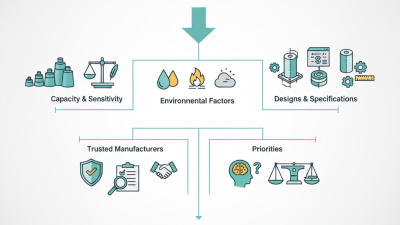
Moreover, knowing the specifications of the load cell is vital. Accuracy, temperature sensitivity, and durability should be assessed. An excellent load cell will provide consistent readings over time. However, it’s important to reflect on our choices. Have we prioritized features effectively? Are we ready to invest in quality over cost? These reflections will guide you in making the best decision for your situation.

Understanding the Basics of Load Cells and Their Applications
Load cells are essential devices used to measure weight or force. They convert mechanical force into an electrical signal. Understanding their operation is crucial for selecting the best load cell. A fundamental type is the strain gauge load cell. This design utilizes a metal element that deforms under load. The resulting change in resistance is measured, giving an accurate weight reading.
Applications of load cells are vast. They are pivotal in industrial scales, weighing systems, and material testing. In manufacturing, accurate weight measurement ensures product consistency. Load cells also support research, aiding in material strength tests. However, potential inaccuracies can arise from environmental factors like temperature and humidity. This makes careful selection critical for reliable readings.
Choosing the right load cell requires familiarity with specific applications. A standard 100kg load cell may suffice for general use. More specialized applications might need high precision or unique designs. It’s vital to consider factors such as load limits, environmental conditions, and accuracy requirements. Testing and reviewing multiple options can lead to better decisions.
How to Choose the Best 100kg Load Cell for Your Needs?
| Parameter |
Specification/Detail |
| Load Capacity |
100kg |
| Type |
Strain Gauge |
| Output Voltage |
2mV/V |
| Accuracy |
±0.03% |
| Operating Temperature Range |
-10 to 60 °C |
| Material |
Aluminum |
| Cable Length |
1.5m |
| Protection Rating |
IP67 |
| Applications |
Weighing Scales, Industrial Automation, Medical Devices |
Key Factors to Consider When Choosing a 100kg Load Cell
Choosing the right 100kg load cell is crucial for accuracy and reliability in various applications. One key factor to consider is the load cell's accuracy rating. According to a report by the International Society of Automation, high-precision load cells can offer uncertainties as low as 0.01% of full scale. This means that for a 100kg load cell, the error could be around just 10 grams. Such precision is vital for applications like laboratory testing or quality control in manufacturing.
Another aspect is the environment where the load cell will be used. Factors like humidity, temperature, and exposure to chemicals can impact performance. Load cells designed for harsh environments often come with protective coatings or enclosures. A report from the American Society for Testing and Materials emphasizes that neglecting these environmental conditions can lead to a 15-30% decrease in lifespan. These factors prompt reflection on your choice and how your specific needs align with the load cell’s specifications.
Lastly, consider the installation and integration process. The ease of installation can affect the load cell's reliability and long-term performance. Some systems require complex calibration procedures, potentially leading to human error. A study published in the Journal of Sensor Technology revealed that about 12% of load cell failures are attributed to improper installation. These insights underscore the importance of doing thorough research before making a decision.
Load Cell Selection Factors
Types of 100kg Load Cells and Their Specific Advantages
When choosing a 100kg load cell, understanding the different types available is essential. Load cells are broadly classified into three main types: strain gauge, load beam, and hydraulic load cells.
Strain gauge load cells are popular due to their high accuracy and small size. They work by measuring strain on a metallic element. These cells are very reliable for applications needing precision. Load beams are robust and ideal for heavy-duty tasks. They excel in environments with varying temperatures. However, they might not be as sensitive as strain gauges. Hydraulic load cells use fluid pressure to measure weight and are great for extreme conditions. Yet, they can be bulkier and may require more maintenance.
Tips: Consider the environment where the load cell will be used. Extreme temperatures can affect performance. Also, think about the required accuracy. It might be tempting to choose a lower-cost option, but saving on quality could lead to errors.
Choosing the right type may take some reflection. Understand your specific needs deeply. Each type has its pros and cons. Picking the wrong one may lead to frustration. Use these insights wisely to make a more informed decision.
Evaluating Accuracy and Calibration Options for Load Cells
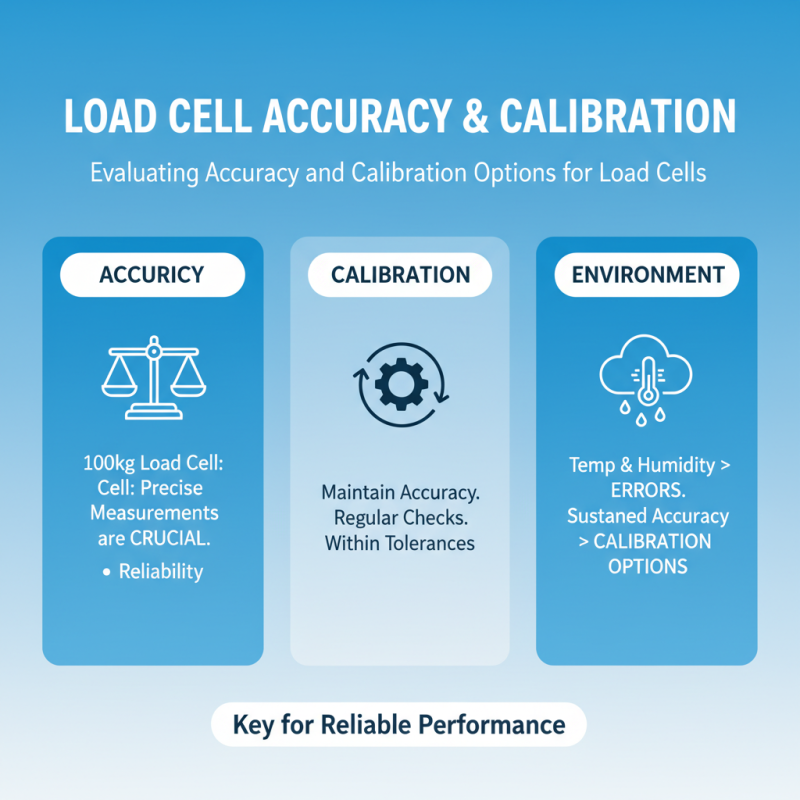
When selecting a 100kg load cell, accuracy is a crucial consideration. Load cells need to provide precise measurements for reliability. Calibration is essential to maintain this accuracy. Regular calibration ensures your load cell continues to perform within specified tolerances. The environment can affect measurements. Temperature and humidity may introduce errors. Therefore, considering calibration options is vital for sustained accuracy.
Different calibration methods exist. Some require professional services, while others can be done in-house. Automatic calibration mechanisms are also available. These allow real-time adjustments, enhancing reliability. Understanding each method's pros and cons can aid your decision-making. It is vital to reflect on your specific needs. Do you require high precision? Or will standard accuracy suffice?
Furthermore, load cells come with varying degrees of accuracy specifications. It’s important to assess whether these meet your operational requirements. Not every application demands the same level of precision. For example, a manufacturing process might require strict tolerances. However, general weighing may only need approximate values. Therefore, evaluate your needs carefully, balancing cost with precision expectations. Consider how often you can perform recalibration and the associated costs. Your selection should reflect both current and future demands.
Tips for Installation and Maintenance of Load Cells in Your Setup
When it comes to load cells, proper installation and maintenance are crucial for accurate readings and longevity. Research from industry reports indicates that improper installation can lead to errors of up to 10%. Ensuring that the load cell is perfectly aligned is vital. Misalignment can cause uneven pressure, skewing results. Utilize the manufacturer's guidelines to secure the load cell properly. Remember to check for mechanical movement that may affect readings.
Regular maintenance is essential to keep load cells functioning optimally. Dust and moisture can significantly impede performance. According to a study published by the Journal of Instrumentation, 30% of load cell failures are due to environmental factors. Implement a routine cleaning protocol to remove contaminants. It’s also wise to check the electrical connections periodically. Loose or corroded connections can lead to erratic readings and contribute to long-term damage.
Installation and maintenance practices should encourage reflection. Ask yourself, are you following guidelines? Are your conditions ideal for operation? Balancing ideal practices with real-world conditions can be challenging. Acknowledging a need for adjustment boosts performance and reliability in your setup.

 sales@loadcellsensor.com