sales@loadcellsensor.com

How to Choose the Best Weight Measurement Sensor for Your Needs
Choosing the right Weight Measurement Sensor can significantly impact your project outcomes. According to Dr. Emily Johnson, a leading expert in sensor technology, "The effectiveness of a weight sensor hinges on its precision and application." This insight emphasizes the need for careful consideration when selecting a sensor.
There are various types of Weight Measurement Sensors available, each designed for specific applications. For instance, load cells are popular in industrial settings for their accuracy. However, finding the perfect match for your needs isn’t always straightforward. Various factors such as capacity, size, and environment play pivotal roles in your decision.
Consider your project’s demands carefully. Will you require high precision in a compact space? Are environmental conditions a concern? Reflect on these questions before making a choice. Your sensor selection could either streamline your processes or lead to measurement errors. Making an informed decision is crucial in optimizing the efficiency of your applications.
Understanding Different Types of Weight Measurement Sensors
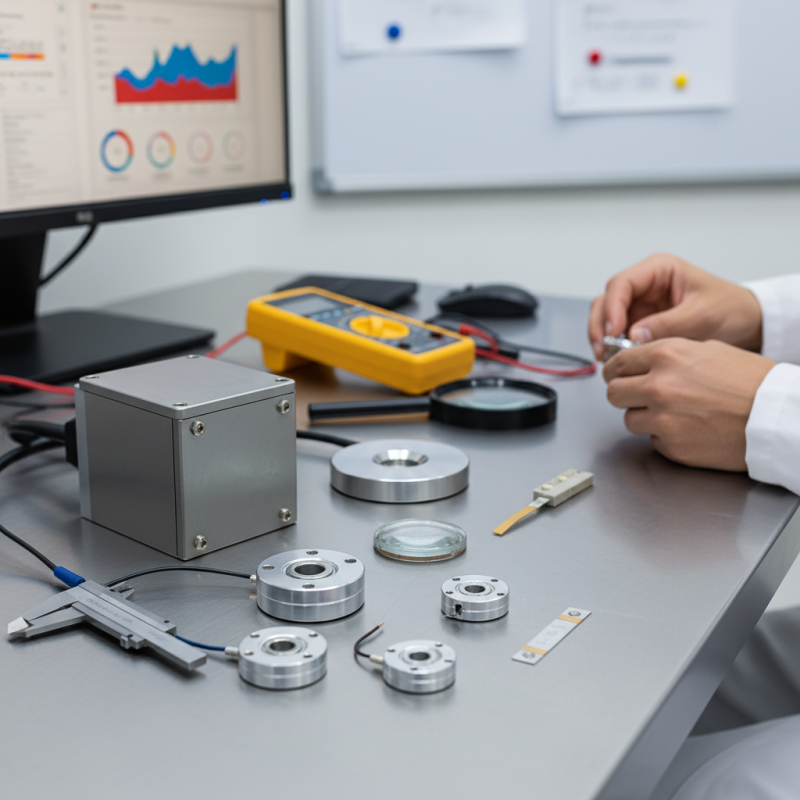
When considering weight measurement sensors, understanding their types is crucial. Load cells are among the most common sensors, converting force into a measurable electrical signal. They are widely used in industrial applications for weighing heavy items. Strain gauge load cells are popular due to their accuracy and reliability. However, they can be sensitive to environmental factors like temperature.
Another option includes piezoelectric sensors. These sensors measure weight by detecting changes in charge. They excel in dynamic applications, such as weighing items in motion. While they provide high sensitivity, they may struggle with static weights. Understanding these nuances helps you select the right sensor for your application.
Resistive and capacitive sensors represent other types. Resistive sensors depend on material deformation, but they may lack precision. Capacitive sensors measure weight by tracking changes in capacitance, providing a good balance between cost and performance. Still, their performance can suffer in humid environments. Evaluating these types ensures you find a reliable solution for your specific needs.
Key Factors to Consider When Choosing a Weight Sensor
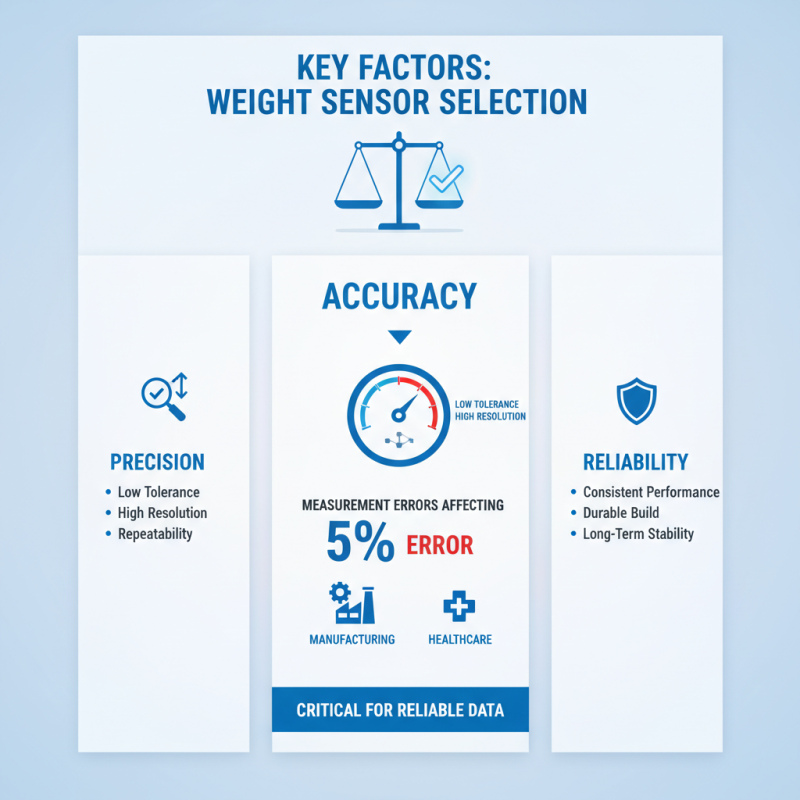
When choosing a weight measurement sensor, several key factors come into play. Accuracy is paramount; a sensor's precision can greatly impact your data. According to industry reports, inaccuracies can lead to measurement errors of up to 5%. This could affect various industries, from manufacturing to healthcare, where exact weight readings are critical. Look for sensors with low tolerances and high resolution to ensure reliable performance.
Another consideration is the sensor's capacity. Every application has different weight requirements. For example, in industrial settings, sensors may need to handle loads exceeding several tons. In contrast, precision sensors might only need to manage smaller quantities. Selecting a sensor that aligns with your specific load requirements is crucial. Data indicates that mismatched capacities contribute to performance failures in 15% of installations.
The environment where the sensor operates also matters. Sensors exposed to humidity, dust, or extreme temperatures may need protective features. Feelings of uncertainty often arise with installations in harsh environments. Reportedly, over 25% of devices fail due to environmental factors. Overall, assessing the accuracy, capacity, and environmental suitability of weight sensors can mitigate these risks.
Evaluating Accuracy and Precision in Weight Measurement
When selecting a weight measurement sensor, accuracy and precision are crucial. Accuracy refers to how closely a measurement aligns with the true value. Precision, on the other hand, indicates how consistent measurements are when repeated. A study by the National Institute of Standards and Technology highlighted that a sensor can vary in accuracy by up to 5% if not properly calibrated.
Regular calibration is essential for maintaining accurate results. For instance, strain gauge load cells typically need recalibration biannually, especially in industrial settings. In contrast, more advanced sensors like piezoelectric transducers can provide higher precision but may require specialized knowledge for setup and maintenance. Users often overlook this aspect, leading to errors that can compromise data integrity.
Tips: Always verify sensor specifications. Look for devices with a published accuracy ratio. Check if regular servicing is recommended. Invest in training for personnel handling the equipment. Being vigilant about these factors can profoundly enhance reliability in weight measurement tasks. Remember, overlooking small details can lead to significant discrepancies in results.
Assessing Compatibility with Existing Systems and Applications
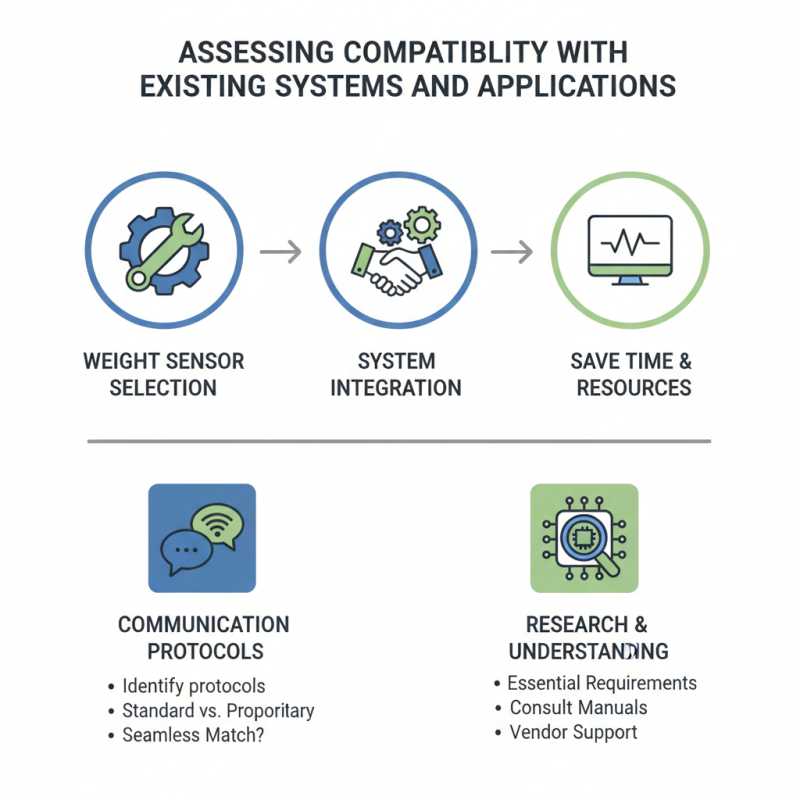
When selecting a weight measurement sensor, compatibility with existing systems is crucial. Assessing how well the sensor integrates with your current setup can save time and resources. Consider the communication protocols used in your applications. Many sensors operate on standard protocols, but not all will match seamlessly. Researching and understanding these requirements is essential.
Another factor is the physical dimensions of the sensor. Ensure the sensor fits within your existing hardware space. It may require custom mounts or adjustments. Testing the sensor in your environment is a wise step. Sometimes, sensors do not perform as expected due to unforeseen environmental conditions.
Data accuracy is critical. Validate that the sensor provides reliable measurements for your specific applications. Review case studies or past implementations. Learning from previous experiences can guide your choice. Incompatible sensors can lead to incorrect data, affecting operations. Keeping an open mind about the limits of your current systems will allow you to make the best decision.
Cost Considerations and Long-term Investment in Weight Sensors
When it comes to selecting weight measurement sensors, cost considerations are vital. Budget constraints often determine the initial choice. However, looking closely at long-term investments is equally important. A cheaper sensor may save you money upfront, but it could lead to higher maintenance costs later. An expensive sensor might seem daunting, but its accuracy and longevity can save you money over time.
Investing in quality sensors ensures accuracy in weight measurements. In many applications, precise readings are crucial. For industry and research, even minor discrepancies can lead to significant issues. People may overlook the cost of errors caused by unreliable sensors. In the long run, a sensor that provides consistent results is worth every penny.
Moreover, consider the adaptability of your sensor. Future needs may change, requiring features that a low-cost option simply cannot provide. You might find yourself needing replacements sooner than expected. Evaluating the total cost of ownership is essential. An effective weight sensor may represent a larger initial investment but will pay off through enhanced reliability and reduced error margins.
Related Posts
-
5 Best Weight Sensors Revolutionizing Industrial Measurements: A Data-Driven Comparison
-
Top Strategies for Leveraging Force Transducer Technology in Global Procurement
-

Explore Cutting-Edge Weight Sensors at the Record-Breaking 137th Canton Fair!
-

Navigating Industry Standards for Best Weight Transducer and Its Challenges
-
How to Choose the Right Miniature Load Sensor for Your Project?
-
Ultimate Guide to Comparing the Top Weight Transducers for Global Buyers