How to Choose the Right 500kg Load Cell for Your Needs?
When selecting the right 500kg Load Cell, understanding your specific needs is crucial. This process can be overwhelming. Many factors come into play. Load cells are vital for accurate measurements in various applications. Choosing the right one ensures precision and reliability.
Consider the environment where the load cell will be used. For outdoor settings, durability against weather elements is essential. You might think all load cells are the same. However, material quality and design can vary significantly. Some might fail under heavy-duty conditions.
It's also important to evaluate the intended application. Is it for industrial use or a laboratory setting? Different situations require different specifications. Take your time to research available options. Reflect on past experiences with load cells. Learning from them can inform your choice. The right 500kg Load Cell is out there, waiting for your thoughtful decision.
Understanding Load Cells: Types and Functions
Load cells are essential devices used in weighing systems. They convert force into an electrical signal. This signal helps in determining weight accurately. There are various types of load cells available. Each type serves different functions and applications.
Beam load cells are popular in industrial settings. They are known for their durability and accuracy. However, they can be less sensitive to small weight changes. In contrast, strain gauge load cells offer high precision. They are commonly used in laboratory settings. Still, they may require careful handling due to their sensitivity.
Understanding your specific needs is crucial. Do you require precision or durability? Consider the environment where the load cell will be used. Harsh conditions can affect performance. Reflect on these factors before making a choice. Balancing performance with application is often tricky. The right load cell can significantly impact your work efficiency.
Key Factors to Consider When Selecting a 500kg Load Cell
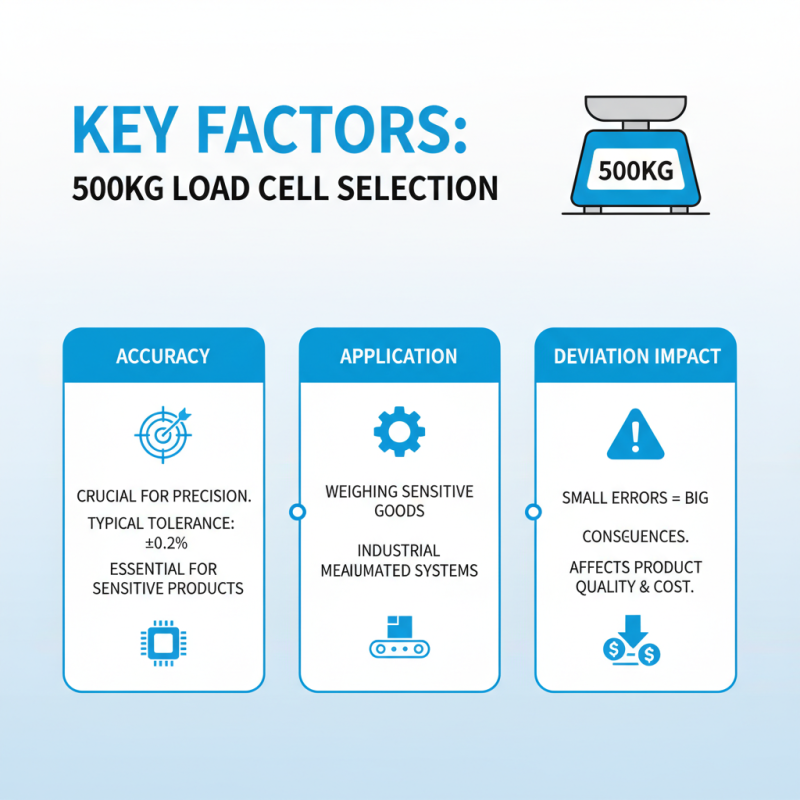
When selecting a 500kg load cell, accuracy is crucial. A typical load cell can have a tolerance of ±0.02%, according to industry standards. You should consider how precise your measurements need to be. For applications like weighing sensitive products, even small deviations can be significant.
Another factor is the load cell's construction. Different materials can affect performance. Stainless steel is common, but aluminum is lighter and may work in less demanding environments. Ensure you know your environment's temperature and moisture levels. Some load cells perform poorly outside their specified conditions.
Compatibility with your system is vital. Check that the load cell’s output matches your equipment. This is often overlooked and can lead to integration issues. Additionally, consider the desired installation area. Space constraints may limit your options. Balancing these factors can be challenging. Sometimes, the best choice may not be the most straightforward one.
Environmental Conditions Impacting Load Cell Performance
When selecting a 500kg load cell, understanding environmental conditions is crucial. Humidity, temperature, and vibration can significantly affect performance. High humidity could lead to corrosion, impacting accuracy. Excessive heat can also skew measurements, altering results. Cold can make components brittle, leading to potential failures.
Consider where the load cell will be used. Indoor environments may be less challenging than outdoor settings. Dust and moisture are common outdoor concerns. Vibration from nearby machines may also disrupt readings, causing confusion. In some situations, shielding or protective casings could help.
Accuracy is not the only issue. Reliability under adverse conditions matters too. A load cell may perform well in ideal environments but fail when conditions change. Neglecting this factor can lead to costly mistakes. Assessing your specific needs and potential environmental stressors is essential.
Impact of Environmental Conditions on 500kg Load Cell Performance
This chart displays the performance of a 500kg load cell under various environmental conditions such as temperature, humidity, and vibration levels. Understanding these factors can help in selecting the right load cell for specific applications.
Calibration and Accuracy: Ensuring Optimal Load Cell Use
Calibration is critical for the accurate performance of a 500kg load cell. An improperly calibrated load cell may yield erroneous readings, impacting measurements and data quality. According to industry reports, a 1% error in calibration can lead to significant discrepancies in weight measurements. This highlights the importance of regular calibration checks to maintain measurement integrity.
Users must also consider environmental factors affecting load cell accuracy. Temperature changes can cause drift in readings. A report by the International Society of Weighing Technology noted that temperature variations could lead to shifts of up to 0.5% in load cells. Proper adjustment practices and periodic recalibration ensure that load cells perform optimally under varying conditions.
In addition, the quality of installation influences load cell performance. Misalignment during setup can create stress points, leading to inaccurate data. Not all setups are ideal. Users must recognize common pitfalls, like insufficient tension or poor mounting techniques. These mistakes can be avoided with careful attention to detail.
Thoughtful installation and diligent calibration practices contribute to a load cell's reliability, ensuring longevity and accurate performance in a variety of applications.
Applications of 500kg Load Cells in Various Industries
500kg load cells are essential in many industries. They offer accuracy in weight measurement and support various applications. In manufacturing, they are used for material testing. They help ensure that products meet required specifications. In the agricultural sector, these load cells measure grain and seed. This ensures proper quantities for both planting and sales.
In the transportation industry, load cells monitor the weight of cargo. This prevents overload, which can cause accidents. They are also used in the food industry to weigh ingredients precisely. This consistency is vital for product quality.
Tips: When selecting a load cell, consider the environment. Humidity and temperature can impact performance. Also think about the capacity. A 500kg load cell is precise but may not handle unexpected weight increases well. Choosing the right sensitivity can also be tricky. If the load cell is too sensitive, it may lead to frequent inaccuracies.

 sales@loadcellsensor.com