How to Choose the Right Shaft Torque Sensor for Your Needs?
Choosing the right Shaft Torque Sensor can be challenging. With various options available, understanding your specific requirements is crucial. Industry expert Dr. Emily Sanders emphasizes, "The right sensor is key to accurate torque measurement." Her insights highlight the importance of precision in selecting a sensor tailored to your needs.
Shaft Torque Sensors are vital for monitoring performance in mechanical systems. They help industries ensure efficiency and safety. Factors such as capacity, size, and environmental conditions affect sensor choice. It's not just a technical decision; it's about improving overall productivity.
Many fail to consider how sensor accuracy impacts operations. Users should reflect on their application requirements. Sometimes, individuals overlook details, leading to wrong choices. Taking time to analyze your needs will yield better results in the long run.
Understanding Shaft Torque Sensors and Their Applications
Shaft torque sensors play a vital role in various industries. They measure the torque of rotating shafts, providing essential data for machinery performance. These sensors help in monitoring systems, improving efficiency, and ensuring safety. In applications like automotive testing and industrial automation, understanding the basics of torque sensors is crucial. They can be used for quality control, maintenance, and process optimization.
Selecting the right torque sensor involves several considerations. The measuring range is essential; it must suit your specific application. Accuracy and resolution are also critical factors. Many users overlook environmental conditions affecting sensor performance. Temperature, humidity, and vibrations can impact readings. Ensuring compatibility with your system’s specifications is crucial too.
While there are many options available, assessing your needs can be challenging. Some sensors may look promising but fail under real conditions. Testing and iterative refinement of your choice might be necessary. Documenting your findings throughout the process can lead to better decisions. This evolves your understanding, fostering expertise in your field.
Torque Sensor Selection Criteria
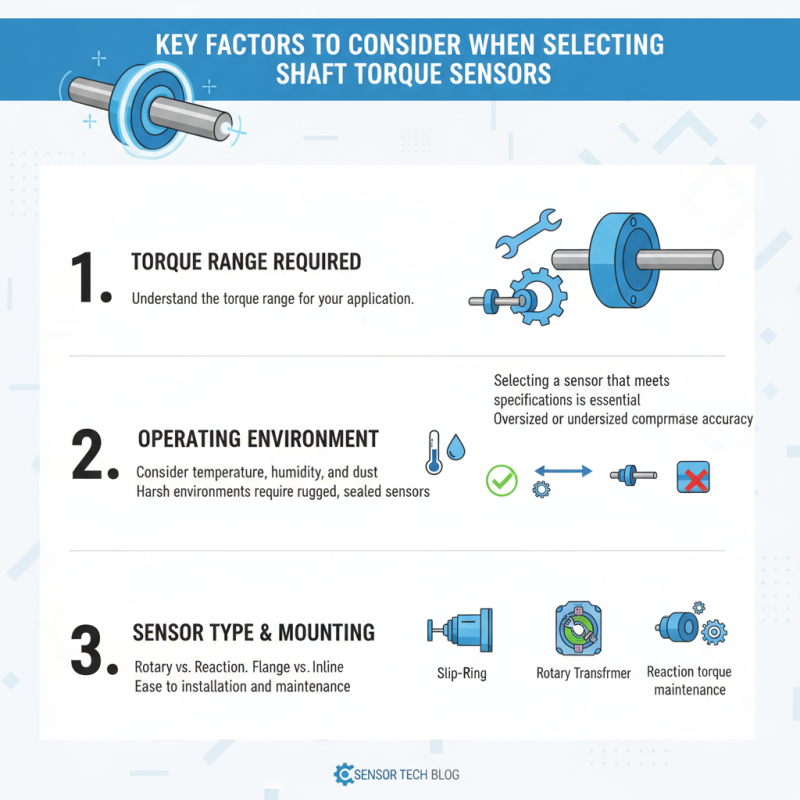
Key Factors to Consider When Selecting Shaft Torque Sensors
When choosing the right shaft torque sensor, several key factors play a significant role. First, understand the torque range required for your application. Sensors come with varying specifications, and selecting one that meets your requirements is essential. Over or under-sized sensors may compromise accuracy and functionality.
Consider the installation space and environmental conditions. Sensors may have different sizes and ratings based on temperature, humidity, and vibration. An unsuitable environment can lead to sensor failure, affecting your overall operations. Using sensors designed for specific environments can enhance durability and reliability.
**Tips:** Always check the sensor's calibration. This can prevent errors in your measurements. Testing the sensor under real conditions provides insights into its performance. Consistent monitoring during use can also highlight any potential issues before they escalate. Make a checklist of requirements and compare different models to find the best fit for your needs.
Different Types of Shaft Torque Sensors and Their Features
When selecting a shaft torque sensor, understanding different types is key. There are several types, including strain gauge sensors and magnetic sensors. Strain gauge sensors measure deformation through electrical resistance changes. They offer high accuracy and sensitivity. Magnetic sensors detect torque using magnetic fields. They are durable and can operate in harsh environments.
Considering the environment where the sensor will be used is crucial. For example, some sensors work well in high-temperature conditions. Others perform better under heavy vibrations. It's important to know your application needs. Some sensors may require calibration; others come pre-calibrated. The choice of sensor can impact overall system performance.
Evaluating features like measurement range and output signal is important. Wide measurement range sensors provide flexibility. Meanwhile, different output signals suit various data processing systems. Think about the type of data you need. Accuracy and reliability are not always aligned. Some sensors may offer high precision but lack robust performance. Research and expertise in selecting the right sensor can make a significant difference.
Evaluating Accuracy and Sensitivity in Torque Sensor Selection
When selecting a shaft torque sensor, accuracy and sensitivity are critical factors. Accuracy refers to how closely a sensor's readings match the actual torque values. Inaccurate sensors can lead to faulty measurements, which may affect performance in critical applications. Look for specifications that detail the sensor's accuracy. A well-documented accuracy percentage can signal reliability.
Sensitivity is equally important. It indicates how well the sensor responds to changes in torque. A highly sensitive sensor can detect minute changes, making it ideal for applications where precision is key. For example, in automotive testing, even slight discrepancies can lead to significant outcomes. A lower sensitivity may fail to capture essential data, leading to oversight.
Consider the environment where the sensor will be used. Certain sensors perform better under specific conditions, affecting both accuracy and sensitivity. Evaluating these factors carefully can lead to better decision-making. Reflect on the potential impacts if the chosen sensor does not meet your requirements. Experimenting with different setups can uncover issues that weren't initially apparent.
Installation and Maintenance Tips for Shaft Torque Sensors
When installing a shaft torque sensor, preparation is crucial. Ensure all components are compatible. Familiarize yourself with the sensor’s specifications. This helps avoid costly mistakes. A common error is misalignment during installation. Achieving perfect alignment enhances sensor accuracy and prolongs its lifespan.
Regular maintenance keeps your sensor functioning correctly. Schedule routine check-ups to inspect connections and calibration. Look for wear and tear signs. Cleaning sensors can improve their performance. Use a soft cloth and appropriate cleaners. Avoid harsh chemicals that may damage sensitive components. Taking these steps reduces the likelihood of unexpected failures.
Tips: Always refer to the manufacturer's guidelines for installation procedures. Documentation often contains valuable insights. Don't skip the calibration process; it ensures that your sensor provides accurate readings. Lastly, maintain an organized workspace during installation, as a cluttered environment can lead to mishaps.

 sales@loadcellsensor.com