How to Choose the Right Inline Load Cell for Your Needs?
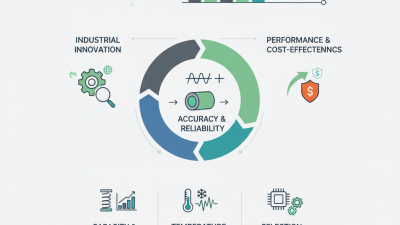
Choosing the right Inline Load Cell is crucial for achieving accurate measurements in various applications. Industry expert Dr. John Smith emphasizes, "The right load cell can make all the difference in precision." Understanding your specific needs is key to selecting the best Inline Load Cell for your project.
Inline Load Cells come in different sizes, capacities, and specifications. Each application has its own requirements. For instance, high-load industrial applications might need durable models, while delicate processes require sensitive options. Not considering these factors can lead to costly errors.
In the world of measurement technology, even minor miscalculations can affect outcomes significantly. With various options available, it's easy to feel overwhelmed. Take the time to evaluate technical requirements, environmental conditions, and budget constraints. Select an Inline Load Cell that truly fits your project needs, and your results will likely improve.

Understanding Inline Load Cell Types and Their Applications
When selecting an inline load cell, understanding different types is crucial. The four common types include tension load cells, compression load cells, bending beam load cells, and shear beam load cells. Each type serves unique applications, tailored to specific environments. According to industry experts, compression load cells are highly suitable for static measurements. Meanwhile, tension load cells excel in dynamic settings, such as weighbridges and industrial scales.
The applications of inline load cells span multiple sectors. For instance, the construction industry often employs shear beam load cells in heavy machinery. A report from a leading engineering journal highlights that 45% of primary industrial processes rely on such technology for precision measurements. Conversely, bending beam load cells find usage in laboratory settings. Their ability to support fine measurements is essential during experiments and product testing.
Despite advancements, there are challenges. Selecting the right load cell can be overwhelming due to technological variety. Ensuring compatibility with existing equipment is vital, as mismatches can lead to inaccurate data. Moreover, load cell performance can degrade over time. Regular calibration is necessary to maintain reliability. These considerations should guide buyers in making informed decisions about inline load cell types.
Key Factors to Consider When Selecting an Inline Load Cell
Choosing the right inline load cell is crucial for accurate measurements in various applications. Several key factors must be evaluated. First, consider the load capacity needed for your specific application. Load cells are designed to handle different weight ranges. Selecting one that meets your requirements ensures reliable performance.
Next, think about the environment where the load cell will be used. Some models are better suited for harsh conditions. If moisture or dust is a concern, opt for sealed models. This choice contributes to longevity. Also, pay attention to the material of the load cell. Stainless steel options offer durability and resistance to corrosive substances.
Another critical factor is calibration. Miscalibrated load cells can lead to errors. It's essential to ensure regular calibration checks, especially in high-precision tasks. This process can be tedious and sometimes overlooked. Keeping track of calibration logs is advisable. Furthermore, investigate the integration capabilities with your existing systems. Compatibility can streamline processes and enhance efficiency.
Technical Specifications: Capacity, Accuracy, and Sensitivity Explained
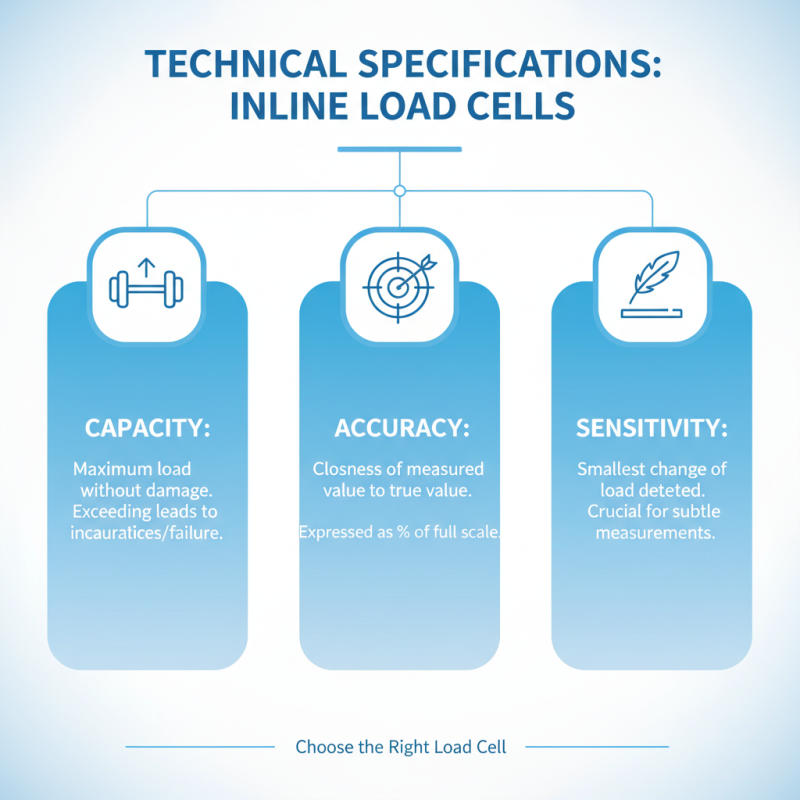
Choosing the right inline load cell requires an understanding of key technical specifications. Capacity is a primary consideration. It indicates the maximum load the cell can handle without risk of damage. For many applications, exceeding this limit can lead to inaccuracies or even failure.
Accuracy is equally important. It measures how close the load cell’s readings are to the actual load. A general industry benchmark indicates that high-quality load cells offer accuracies within ±0.01% to ±0.1% of the reading. This precision is crucial in sensitive applications like material testing or quality control.
Sensitivity reflects how well a load cell can detect small changes in load. High-sensitivity load cells can measure minute differences, often as small as 0.1 grams. This feature is vital in research settings, where small variations can have significant implications. However, it’s essential to balance sensitivity with stability. A highly sensitive cell may show greater fluctuations in noisy environments, leading to potential misreadings. Understanding these parameters can significantly influence the choice of a load cell for specific needs.
The Role of Environmental Conditions in Load Cell Selection
When selecting an inline load cell, environmental conditions play a crucial role. Factors such as humidity, temperature, and exposure to dust or chemicals can significantly impact performance. For instance, a report from the International Society of Automation states that nearly 30% of load cell failures are due to environmental stressors. Choosing a weatherproof or temperature-stable load cell can mitigate these risks.
High humidity can skew measurements, while extreme temperatures can affect accuracy. Some studies indicate that load cells may experience a drift of approximately 0.02% per degree Celsius outside their specified range. This data emphasizes the need for specific designs that cater to your environment. Regular maintenance can also prevent long-term degradation, yet often, this is overlooked.
While many focus on the load cell's capacity, the surrounding environment deserves equal attention. In certain applications, neglecting environmental factors can lead to a 10% drop in measurement reliability. This highlights the complexity of proper selection and the necessity for careful evaluation. A thorough understanding of your operational context can guide you in making a better-informed choice.
How Environmental Conditions Affect Load Cell Performance
Common Misconceptions About Inline Load Cells and Their Usage
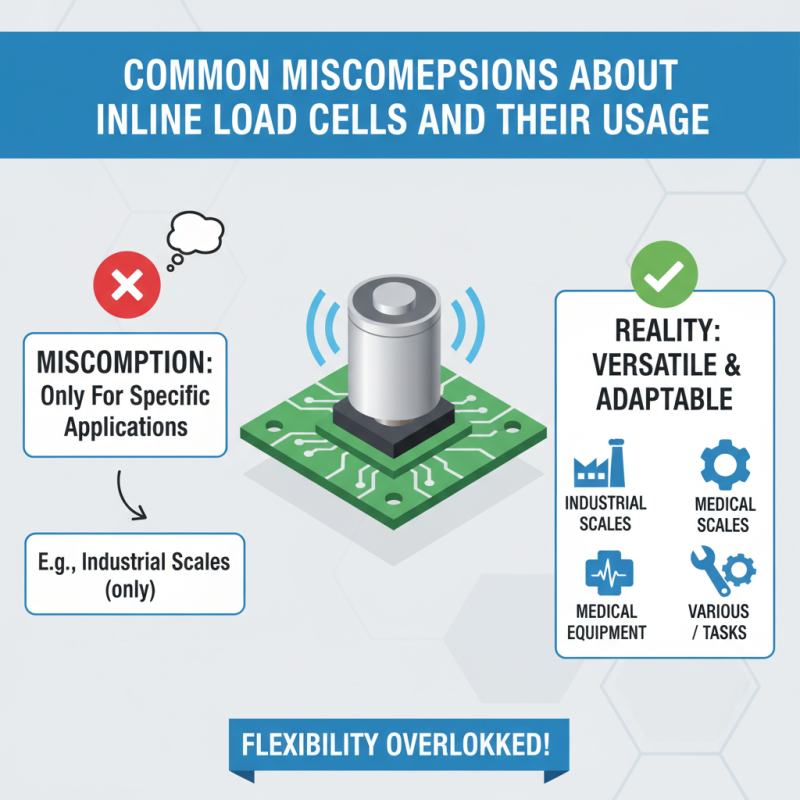
When it comes to inline load cells, many misconceptions exist. One common belief is that these devices are only suited for specific applications. This is not true. Inline load cells are versatile and can be used in various settings, from industrial scales to medical equipment. Their flexibility makes them ideal for many tasks, yet many overlook this adaptability.
Another misconception is about their accuracy. Some assume that inline load cells offer less precision compared to other types of load cells. In reality, many inline models are designed to provide high precision and reliability. It's crucial to understand factors like calibration and environmental conditions that can impact performance. Potential users should be aware that poor installation can lead to significant measurement errors.
Moreover, many think these cells are too complex to integrate into existing systems. While configuration can be challenging, the right guidance can simplify the process. Understanding your specific requirements will help you make an informed decision, even if it takes time. Ultimately, being aware of these misconceptions is vital for anyone considering the use of inline load cells.

 sales@loadcellsensor.com