What is a Hollow Load Cell and How Does It Work?
In the world of precision measurement, the Hollow Load Cell stands out for its innovative design and functionality. Richard Wood, a renowned expert in load measurement technology, remarked, "The Hollow Load Cell is revolutionizing how we understand weight distribution and stress analysis." This technology is essential in applications where traditional load cells may fall short.
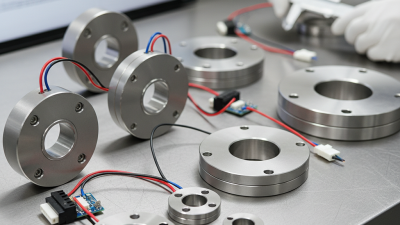
Hollow Load Cells have a unique structure that allows for greater sensitivity and accuracy. They consist of a cylindrical body with a central bore, which enhances their capability to measure loads in confined spaces. Industries such as aerospace and construction heavily rely on these devices for accurate weight assessments. Understanding how these cells work can significantly improve operational efficiency.
However, despite their advantages, some misconceptions and complexities exist. For instance, the initial setup may require careful calibration to avoid inaccuracies. Users must also be aware of environmental factors that can impact performance. As the industry evolves, continuous learning about Hollow Load Cells remains crucial. This innovation holds promise, but like any technology, it demands thorough comprehension and evaluation.

What is a Hollow Load Cell?
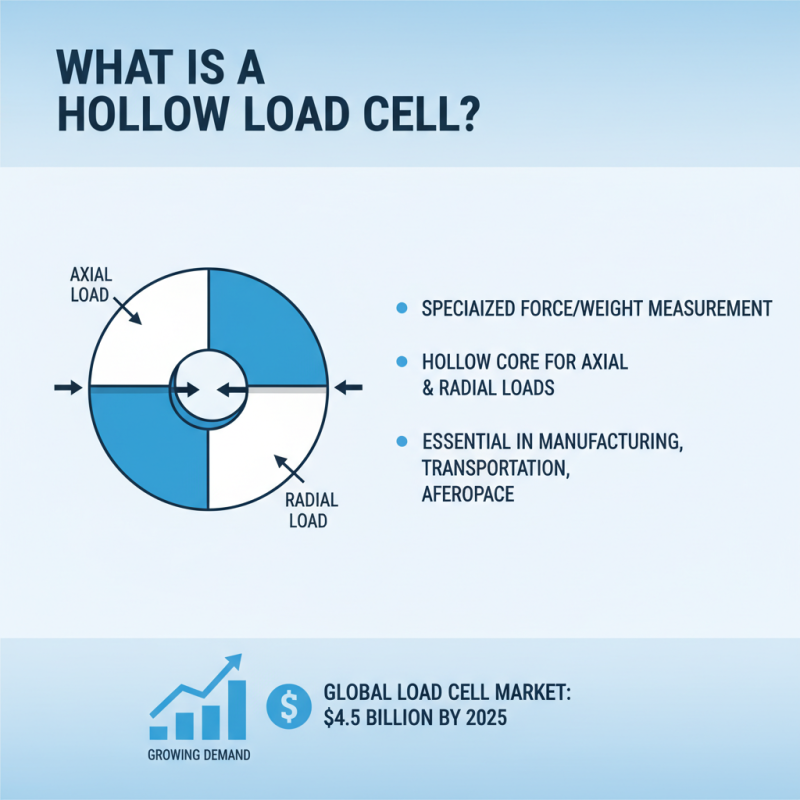
A hollow load cell is a specialized device used to measure force or weight. Its design features a hollow core, which allows for the application of loads both axially and radially. These cells play an essential role in various industries such as manufacturing, transportation, and aerospace. According to a recent market analysis, the global load cell market is expected to reach $4.5 billion by 2025, highlighting the growing demand for advanced measurement technologies.
This type of load cell offers several advantages. It provides high accuracy and stability in measurements. The hollow center facilitates the measurement of larger objects without the need for extensive support structures. However, using hollow load cells can sometimes be challenging due to their sensitivity to external factors. Environmental conditions, such as temperature and moisture, might influence their performance. Manufacturers must ensure that load cells are correctly calibrated for accurate readings.
Reliability is a key factor when implementing hollow load cells. Regular maintenance and testing are required to uphold their precision. A report from a leading engineering firm suggests that proper installation can increase lifespan by 30%. Despite these benefits, users must be aware of potential issues like overloading. This could lead to significant errors in data collection. It’s crucial for operators to follow strict guidelines to safeguard the integrity of their measurements.
Principles of Operation for Hollow Load Cells
Hollow load cells are essential in precision measurement applications, often used in industrial settings. Their operation relies on a unique principle: the measurement of force through deformation. This deformation occurs when a load is applied to the load cell. The resulting strain on the cell is measured using strain gauges, which translate mechanical deformation into an electrical signal.
Research indicates that hollow load cells provide significant advantages. They typically have a high accuracy rate, often exceeding 0.03% of full-scale output. The design allows for a compact and lightweight solution, making them versatile for various setups. However, one must consider installation angles and environmental factors. Any misalignment can lead to measurement errors that can compromise data integrity.
The principle behind hollow load cells emphasizes their importance in industries ranging from automotive to aerospace. They can withstand challenging conditions, including high temperatures and harsh environments. Nevertheless, careful calibration is essential. In practice, users sometimes overlook this step, potentially leading to inaccuracies. Addressing these nuances is critical for maintaining the reliability and effectiveness of hollow load cells in demanding applications.
What is a Hollow Load Cell and How Does It Work? - Principles of Operation for Hollow Load Cells
| Parameter |
Description |
Typical Value |
| Capacity |
Maximum load the cell can measure |
5, 10, 25, 50 tons |
| Material |
Commonly used materials for hollow load cells |
Alloy steel, stainless steel |
| Output Signal |
Type of signal generated by the load cell |
Analog (mV/V), Digital (RS-232, RS-485) |
| Accuracy |
Precision of the measurement |
±0.03% to ±0.1% |
| Operating Temperature |
Range of ambient temperatures for operation |
-10°C to +60°C |
| Protection Class |
Resistance to environmental factors |
IP65, IP67 |
| Installation |
Typical installation configurations |
Bolt-on, threaded mounting |
Applications of Hollow Load Cells in Various Industries
Hollow load cells are widely used across various industries for measuring weight and force. These sensors are designed to be hollow in the center, allowing objects to be placed inside. This unique design makes them ideal for applications where space is limited. Industries like manufacturing, aviation, and even medical fields leverage hollow load cells for precise measurements.
In the aerospace sector, hollow load cells are crucial for measuring the weight of components and structures. They help ensure that aircraft are within safety limits during manufacturing and maintenance. Medical devices also benefit from these sensors; they measure the weight of patients or medical equipment accurately. It’s interesting how these cells improve safety and efficiency in critical areas.
**Tip:** Regular maintenance enhances the accuracy of load cells. Dust and debris can affect readings, so keeping them clean is essential.
Another application is in construction. Hollow load cells monitor the weight of materials on-site. This helps prevent overloading equipment. However, miscalculations can happen, leading to potential hazards. It’s vital to calibrate equipment regularly to avoid this.
**Tip:** Invest in quality calibration tools. They can save time and money in the long run.
Hollow Load Cells in Various Industries
Advantages and Disadvantages of Hollow Load Cells
Hollow load cells are unique devices used for measuring loads. They have a central cavity and are often used in tension and compression applications. Understanding their advantages and disadvantages is crucial for select the right load cell for your needs.
One of the main advantages of hollow load cells is their versatility. They can measure both tensile and compressive forces. This makes them suitable for various applications, such as weighing systems and structural testing. Their design ensures that they can handle heavy loads without compromising accuracy. However, this comes with a weight consideration; they are generally more substantial than other types.
On the downside, hollow load cells can be more expensive. The advanced technology used in their design often results in higher manufacturing costs. Additionally, their complexity can lead to challenges in installation and calibration. If the setup is not done correctly, it can affect performance.
Tip: Always consult with an expert before making your choice. They can help you identify the best application for your load cell. Assess your specific needs and budget, as this can influence your decision. It's essential to weigh the advantages against any potential downsides before proceeding.
Maintenance and Calibration of Hollow Load Cells
Maintaining and calibrating hollow load cells is essential for accurate measurements. Regular checks help ensure reliability. Dust and moisture can interfere with performance. Keeping the load cell clean is crucial. Schedule routine maintenance every few months to avoid discrepancies in readings.
During calibration, use known weights to ensure the load cell responds accurately. Verify if the output matches the expected input. Document the calibration results to track changes over time. This practice enhances accountability in measurement processes.
**Tips:** Monitor environmental factors that might affect the load cells. High humidity can lead to corrosion. Always use appropriate tools for adjustment. Seek professional assistance when needed. A small oversight can lead to bigger errors in data. Staying vigilant pays off in the long run.

 sales@loadcellsensor.com