What is a Pancake Load Cell and How Does it Work?
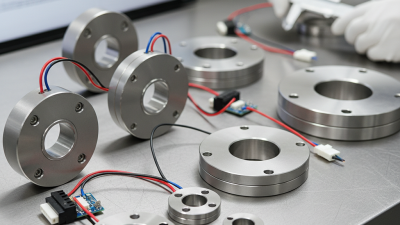
The Pancake Load Cell is a unique sensor type, widely used in various industries. Its design resembles a pancake, hence the name. This shape provides distinct advantages in measuring force and weight. A Pancake Load Cell allows for high precision in applications where space is limited.
These sensors operate on a principle called strain gauge technology. When weight is applied, the cell deforms slightly, producing a measurable electrical signal. This process transforms mechanical force into an electronic output. Precision is key, making the Pancake Load Cell ideal for critical measurements, such as in laboratories.
Understanding how a Pancake Load Cell functions is essential for engineers and technicians. They must accurately select and implement this technology in real-world applications. Despite its reliability, the installation and calibration can be challenging. It requires expertise to ensure optimal performance and accurate readings.
What is a Pancake Load Cell?
Pancake load cells are precision devices used to measure force or weight in various applications. Their unique design resembles a pancake, which is where the name comes from. They feature a flat, low-profile shape, allowing them to occupy minimal space. This design is particularly beneficial in environments where height restrictions exist.
According to industry reports, pancake load cells deliver high accuracy, often within 0.1-0.5% of the reading. This level of precision is crucial in sectors such as manufacturing, aerospace, and research laboratories. These cells can handle significant loads while maintaining their accuracy and reliability. Additionally, they are often constructed from high-strength materials that enhance durability, allowing them to function effectively under harsh conditions.
Pancake load cells can be sensitive to environmental factors. Temperature fluctuations may affect their readings, leading to discrepancies. Regular calibration is essential to maintain accuracy. The challenging nature of load detection can also result in measurement errors if the load is not evenly distributed across the cell. Therefore, it is vital to consider installation best practices to ensure optimal performance and reliability.
Design and Construction of Pancake Load Cells
Pancake load cells are a crucial component in industrial weighing systems. Their design features a flat shape, resembling a pancake, which allows them to handle large forces while maintaining accuracy. Constructed with durable materials, these load cells often use strain gauges. The gauges measure the deformation caused by applied weight, converting mechanical stress into an electrical signal.
When it comes to construction, a careful approach is essential. The sensors should withstand extreme conditions, including temperature changes and moisture. Manufacturers often test these cells rigorously to ensure durability and accuracy. Nonetheless, variations can occur in performance due to manufacturing tolerances. Regular calibration is vital to maintain precision and reliability.
Tips: Always check the load cell's specifications to match your application requirements. Ensure proper installation to prevent misalignment, which can lead to erroneous readings. Regular maintenance is key for long-term use and reliable performance.
Pancake Load Cells - Load Capacity vs. Strain
How Pancake Load Cells Measure Force
Pancake load cells are essential tools for measuring force. Their design resembles a flat, thick disk. This unique shape allows for a low profile while still providing high accuracy. They are often used in industrial applications, such as material testing and weighing systems.
How do these load cells measure force? They operate based on the principle of strain gauges. When force is applied, the pancake cell deforms slightly. This deformation affects the electrical signals in the attached strain gauges. The changes in resistance are then measured to calculate the applied force. It’s a precise method, yet it requires careful calibration.
Users must consider installation and environmental factors. Improper setup can lead to inaccurate readings. Even subtle misalignments can affect the measurements. Regular maintenance is important for maintaining reliability. These aspects highlight the need for expertise in using pancake load cells effectively. It's crucial to understand both the technology and the application to avoid mistakes.
Applications of Pancake Load Cells in Industry
Pancake load cells are increasingly utilized in various industrial applications due to their compact design and high precision. These load cells can handle a range of forces, making them suitable for both tension and compression measurements. According to a recent report by the International Journal of Advanced Manufacturing Technology, the market for load cells is expected to grow by 5.6% annually, indicating robust industry demand.
In manufacturing, pancake load cells play a crucial role. They ensure accurate measurement during assembly processes. For instance, they are commonly used in the aerospace and automotive sectors for testing the integrity of components. These applications often require measuring forces that can be as high as 200 kN. This capability makes pancake load cells invaluable for quality assurance.
Another significant application is in the food industry. They are essential in weighing systems for bulk materials. Accurate measurements prevent overfilling or underfilling, ensuring efficiency. The total cost savings from these applications are estimated to reach millions annually. However, reliance on precise measurement systems can be challenging. Manufacturers must regularly calibrate their devices to maintain accuracy, adding operational complexity.
What is a Pancake Load Cell and How Does it Work? - Applications of Pancake Load Cells in Industry
| Dimension |
Value |
Unit |
Application |
| Rated Capacity |
5000 |
lbs |
Material Testing |
| Height |
1.5 |
inches |
Force Measurement |
| Diameter |
3.0 |
inches |
Industrial Scales |
| Output Signal |
2.0 |
mV/V |
Calibration |
| Temperature Range |
-10 to 50 |
°C |
Laboratory Testing |
| Material |
Aluminum |
- |
Sensor Construction |
Advantages and Limitations of Pancake Load Cells
Pancake load cells are widely used in industrial applications for measuring force and weight. Their key advantages lie in their compact design and high accuracy. These sensors are often employed in scenarios requiring precise load measurements. Reports indicate that pancake load cells can achieve accuracies of up to 0.1% of the full scale. This precision makes them indispensable in testing and measuring systems.
Despite their strengths, pancake load cells have limitations. For instance, their size can restrict installation options in tight spaces. Additionally, they need proper alignment to function optimally. Misalignment can lead to measurement errors. According to industry research, misaligned load cells can have an error margin of up to 2%. This statistic underscores the need for careful installation and calibration.
Another aspect to consider is their sensitivity to temperature variations. Changes in ambient temperature can affect their readings, introducing potential inaccuracies. An analysis from a leading sensor technology report highlights that temperature compensation is crucial for maintaining accuracy in diverse environments. Users should remain aware of these factors when incorporating pancake load cells into their systems.

 sales@loadcellsensor.com