What is a Rope Tension Load Cell and How Does It Work?
The Rope Tension Load Cell is an essential component in various industries. It measures the tension in ropes or cables, providing accurate data for numerous applications. According to Dr. Emily Johnson, a leading expert in load measurement technology, "Rope tension load cells offer precision that enhances safety in lifting operations."
These devices work by converting mechanical tension into electrical signals. As weight is applied, the load cell deforms slightly. This deformation is measured and converted into an electronic readout, ensuring accurate monitoring of force. The importance of precision cannot be overstated. Errors in measurement can lead to unsafe conditions.
Yet, the technology is not without its imperfections. Calibration can be tricky, and environmental factors may affect readings. Regular maintenance is vital to ensure continued accuracy. As industries evolve, understanding the nuances of the Rope Tension Load Cell becomes increasingly critical. Each challenge presents an opportunity for advancement and innovation in load measurement solutions.
What is a Rope Tension Load Cell?
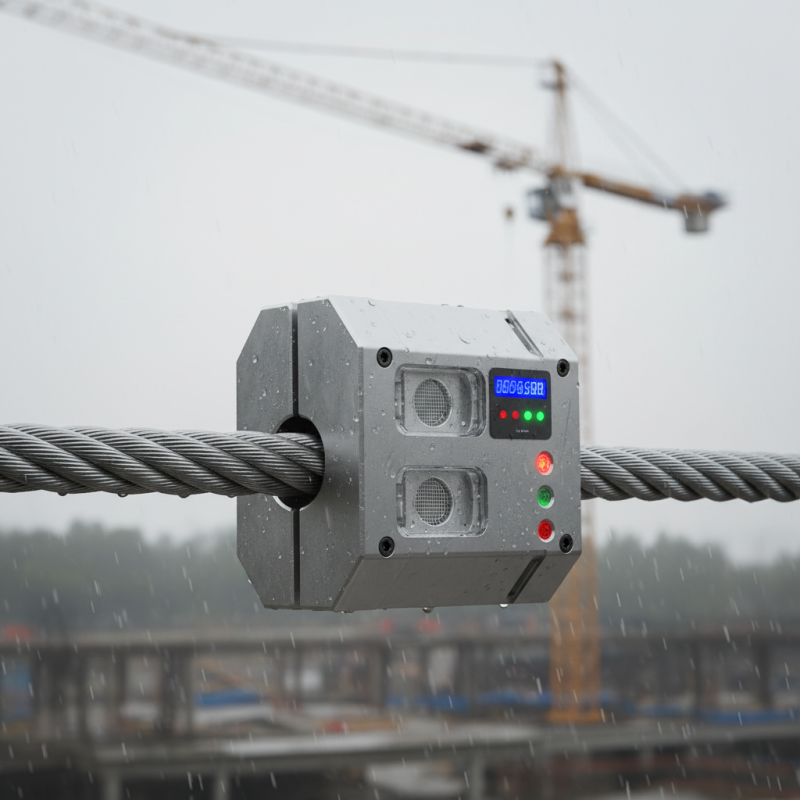
A rope tension load cell is an essential tool in various industrial applications. Its primary purpose is to measure the tension or load exerted on a rope or cable. These load cells are often used in construction, shipping, and scientific experiments. They provide accurate data to help ensure safety and efficiency during operations.
The design of a rope tension load cell typically includes a sensing element that converts tension into an electrical signal. This conversion allows for real-time monitoring of the load. Some designs utilize strain gauges, which change resistance when stretched. Others might use piezoelectric sensors, reacting to mechanical stress. When forces act on the rope, the load cell quantifies this in measurable data.
Sometimes, users may encounter challenges, such as incorrect installation or environmental factors affecting measurements. These issues can lead to inaccuracies. Proper calibration and regular maintenance are crucial for optimal performance. Users should also review environmental conditions, as extreme temperatures can impact sensor readings. Constant vigilance is necessary for reliable load measurement.
Components of a Rope Tension Load Cell
A rope tension load cell is a crucial component for measuring force along a rope. Its design is simple yet effective.
The primary components include a sensing element, a housing unit, and a mounting kit. The sensing element is typically made from strain gauges that respond to tension. They convert this force into an electrical signal for measurement.
The housing unit protects the internal elements. It keeps dust and moisture out, ensuring durability. The mounting kit allows for easy installation. Adjusting it requires precision. Users often overlook this part, leading to inaccurate readings. Proper installation is key to performance.
Another vital aspect is calibration. It ensures the load cell provides accurate data. Missing this step can lead to errors. In real-world applications, these inaccuracies may result in serious issues. Regular checks can help maintain reliability.
A rope tension load cell is powerful yet sensitive to setup and maintenance. Adjustments and checks are necessary for optimal function.
How Rope Tension Load Cells Measure Force
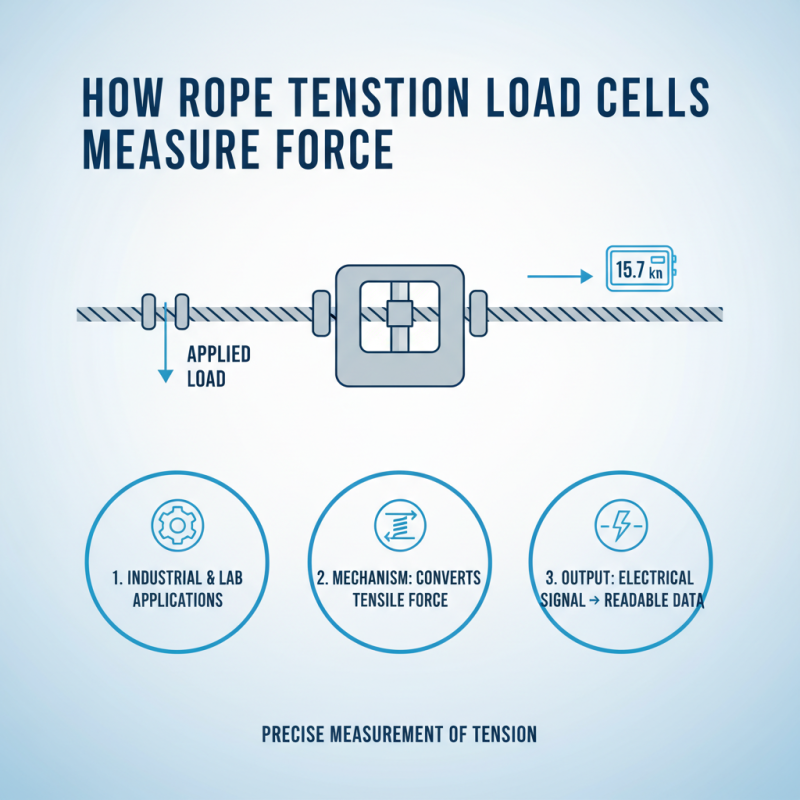
Rope tension load cells are crucial in measuring force in various applications, from industrial settings to research labs. These devices use a simple mechanism to provide precise measurements of tensile force. When a load is applied, the load cell converts it into an electrical signal that can be easily read and recorded.
The working principle relies on strain gauge technology. As the rope is tensioned, the strain gauge deforms, changing its electrical resistance. This change is proportional to the force applied. According to a recent report by the International Journal of Precision Engineering, these load cells can achieve accuracy levels of up to 0.1%. Such precision is critical in applications like crane operations or structural testing.
However, challenges remain in ensuring consistent performance. Environmental factors like temperature fluctuations can affect readings. Studies have shown that temperature variations of just a few degrees can introduce errors of up to 5%. Users must account for these factors during calibration and operation. Balancing accuracy and environmental considerations is essential for reliable measurements in real-world applications.
Applications of Rope Tension Load Cells
Rope tension load cells are essential tools used in various applications. These devices measure the tension in ropes, cables, or other materials. Many industries rely on them for accurate data. They help monitor the load and ensure safety.
In construction, for example, rope tension load cells can prevent accidents. Workers can monitor the weight of suspended loads. This ensures that cranes or hoists operate within safe limits. In marine applications, these devices track the tension of mooring lines. This helps maintain stability during heavy weather.
The sports industry also benefits from these load cells. They are used in training environments to assess athletes' performance. Accurate tension readings can help trainers adjust workout plans. However, not every setup is straightforward. Environmental factors may affect readings. Users must consider this and adjust their methods accordingly.
Advantages of Using Rope Tension Load Cells in Various Industries
Rope tension load cells are increasingly used in various industries due to their effectiveness in measuring weight and force. In sectors like construction and manufacturing, these devices deliver precise data on loads. According to a report by the International Journal of Engineering Research, the precision levels can reach up to 0.1% for some applications. This accuracy is critical when safety is a concern.
In the shipping industry, rope tension load cells can prevent equipment overload, which is a common challenge. A study highlighted that improper load management led to 35% of shipping accidents in 2020. By integrating these load cells, companies can avoid such costly mistakes. The implementation of these technologies has shown to reduce accident rates significantly.
However, challenges remain in maintaining and calibrating these sensors. Environmental factors can impact their performance. For instance, extreme temperatures and humidity levels may alter readings. Rigorous testing protocols are essential to ensure consistent accuracy over time. Without proper monitoring, companies might face unexpected discrepancies in load readings. The advantages are evident, but careful management is necessary to maximize benefits.

 sales@loadcellsensor.com