What is a Tension Compression Load Cell and How Does it Work?
A Tension Compression Load Cell is a vital tool in various industries. It measures both tension and compression forces accurately. Engineers and technicians widely use these devices in material testing, weighing systems, and structural monitoring.
Understanding how a Tension Compression Load Cell operates helps in appreciating its significance. The cell converts mechanical forces into electrical signals. This process is crucial for ensuring precision in data measurement. Technologies continue to evolve, yet some challenges still exist. Proper installation and calibration are essential for optimal performance.
In real-world applications, these load cells contribute to safety and efficiency. They assist in monitoring structures, ensuring they can withstand loads. However, users must pay attention to maintenance. Neglecting it can lead to inaccurate readings and potential failures. User experiences often highlight these imperfections, urging engineers to innovate and refine techniques.
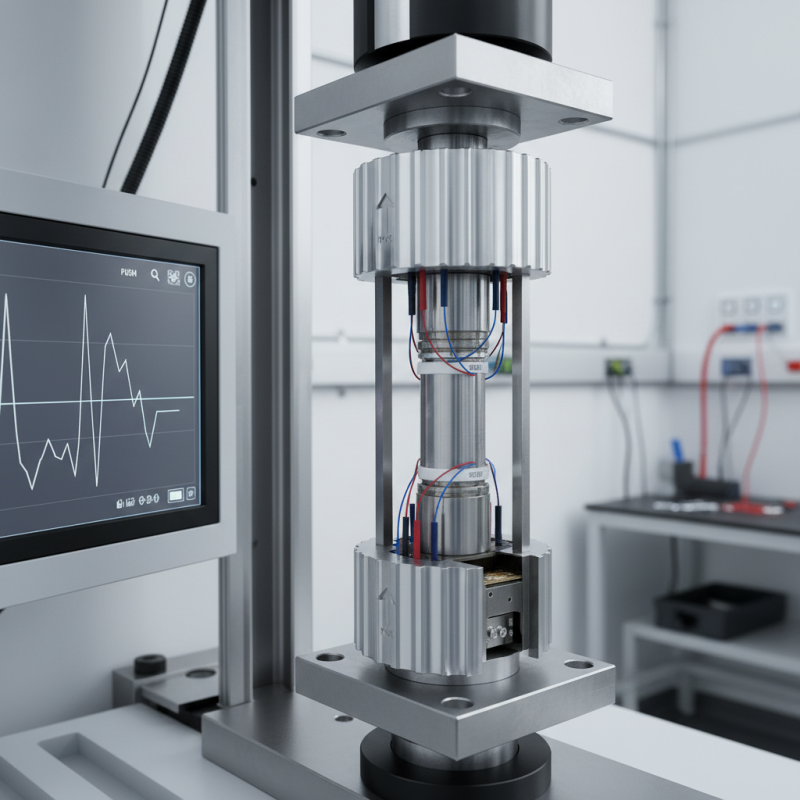
Definition of Tension Compression Load Cells
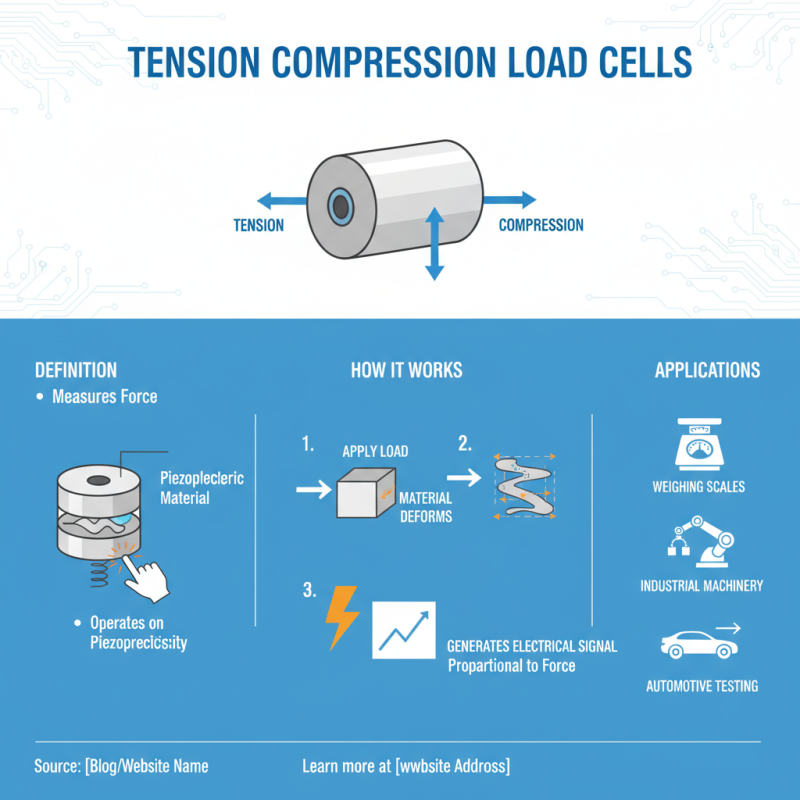
Tension compression load cells are advanced devices used for measuring force. They operate based on a principle called piezoelectricity. When a load is applied, it causes a deformation in the material. This deformation generates an electrical signal proportional to the force. Applications vary from weighing scales to industrial machinery.
Understanding the definition is crucial. Tension compression load cells combine two loading types. They can measure pull, called tension, and push, known as compression. This versatility makes them integral in various fields. Always ensure the load cell is calibrated correctly. Inaccurate readings can lead to poor decisions.
Tips: Regularly check the calibration of your load cell. Small misalignments can affect accuracy. Consider environmental factors like temperature and humidity, which may influence performance. A well-maintained load cell ensures reliable measurements. Test your setup frequently to ensure optimal functioning.
Components of a Tension Compression Load Cell
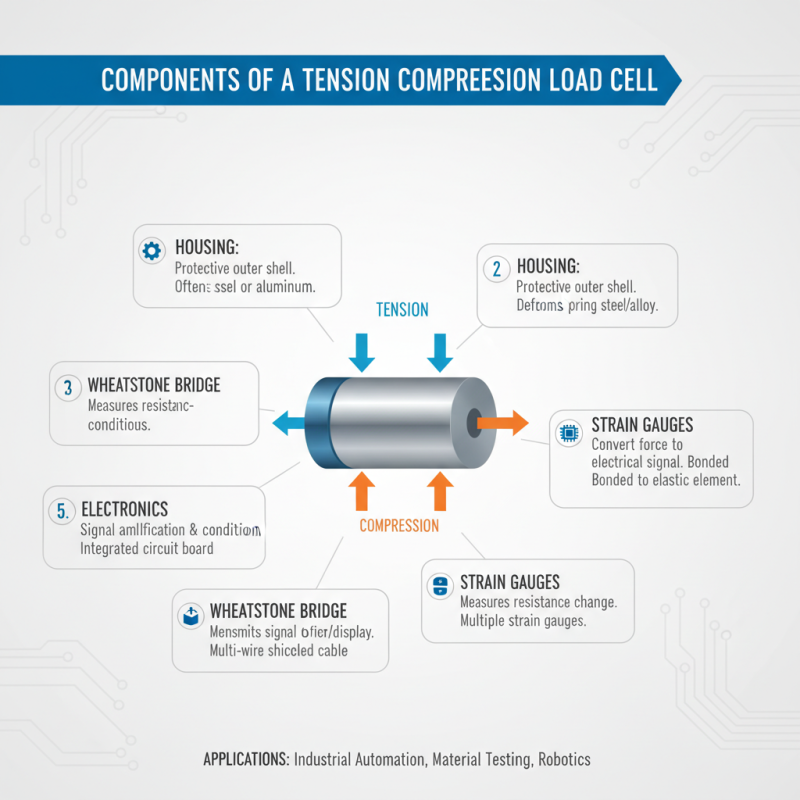
A tension compression load cell is a highly precise device often used for measuring force. Its design allows it to dynamically assess both tension and compression. Understanding the components of this load cell is essential for those working in engineering and industrial applications.
The heart of a tension compression load cell is its strain gauge. This small but crucial component deforms under load, changing its electrical resistance. This change can be quantified and translated into an accurate weight measurement. Typically, load cells feature four strain gauges arranged in a Wheatstone bridge configuration. Such a setup enhances measurement accuracy and compensates for temperature variations.
Another key component is the housing. The housing protects the internal components from external stresses. Made from robust materials, it ensures durability. Proper calibration of the load cell is vital. According to a recent industry report, inaccurate calibration can lead to measurement errors of up to 10%. Regular maintenance is also necessary to maintain accuracy over time. Ensuring these components function well is essential for optimal performance in critical applications, such as manufacturing and quality control.
How Tension Compression Load Cells Operate
Tension compression load cells are crucial in various applications. They measure the force of tension and compression. Understanding their operation can enhance effectiveness in different industries.
These devices consist of a metal body with strain gauges attached. When a load is applied, the metal deforms slightly. This deformation changes the resistance of the strain gauges. The load cell then converts this change into an electrical signal. This signal correlates directly to the force applied.
The design offers versatility in systems where both pulling and pushing forces are present. However, sometimes, load cells may not respond accurately. Factors like temperature fluctuations or mechanical stresses can affect performance. Regular calibration can address some of these issues. Attention to installation is also key. Improper alignment can lead to errors. These nuances remind us of the importance of detail in measurements.
Applications of Tension Compression Load Cells
Tension compression load cells are essential in various industries. They measure force, whether pulling or pushing. These devices are used in manufacturing, aerospace, and construction. Reports indicate that the global load cell market is expected to reach USD 1.75 billion by 2025. This growth reflects the increasing need for precise measurements in critical applications.
In manufacturing, load cells aid in quality control. They ensure that products meet specifications by measuring the exact force during production. In aerospace, these devices test the integrity of components. Engineers rely on accurate data to maintain safety standards. A report by Research and Markets noted that the aerospace sector alone accounted for over 25% of the load cell market in 2019.
Construction is another key area. Load cells help monitor the tension in cables and structural elements. They prevent catastrophic failures by providing real-time data. However, relying too much on technology can be risky. Mechanical systems can fail, and operators must remain vigilant. Regular maintenance and calibration are essential to ensure load cells function correctly. Proper use of these devices can significantly enhance safety and reliability across various fields.
Tension Compression Load Cell Applications
Benefits of Using Tension Compression Load Cells
Tension compression load cells are vital in various industries, ranging from manufacturing to aerospace. They measure the force applied in both tension and compression, ensuring precise measurements. According to a recent industry report, the global load cell market is projected to reach $3.28 billion by 2026, highlighting their growing importance.
The benefits of using tension compression load cells are many. They provide high accuracy, with ISO-certified devices often exceeding ±0.1% error margins. This precision is crucial in applications like material testing and weighing systems. Load cells can also handle different loads. They ensure consistent performance, which is key in quality control processes.
Tips: Regular calibration of your load cells will maintain accuracy. Avoid overloading them, as excessive force can permanently damage the device. Not all load cells are created equal; choose one that suits your specific needs best, even if it takes time. Even slight deviations can lead to significant quality issues over time. Understanding these devices can lead to more reliable results in your operations.

 sales@loadcellsensor.com