Top 10 Load Sensors for 50kg Weight Measurement You Need to Know
When it comes to accurate weight measurement, selecting the right load sensor is crucial, particularly for applications requiring a maximum capacity of 50kg. Load sensors, also known as load cells, play a vital role in various industries, including manufacturing, logistics, and healthcare, by enabling precise weight readings in an efficient manner. This article delves into the top 10 load sensors specifically designed for 50kg weight measurement, offering insights into their features, advantages, and ideal use cases.
Understanding the characteristics and specifications of these load sensors can significantly impact the effectiveness of your measurement processes. From their operational principles to their calibration and maintenance requirements, each load sensor presents unique benefits that cater to different demands. Whether you're seeking a load sensor for industrial automation, commercial scales, or research applications, knowing the best options available ensures that you make informed decisions that enhance accuracy and reliability in weight measurement. Join us as we explore the essential aspects of Load Sensor 50kg technology to elevate your understanding of this critical component in the field of measurement.
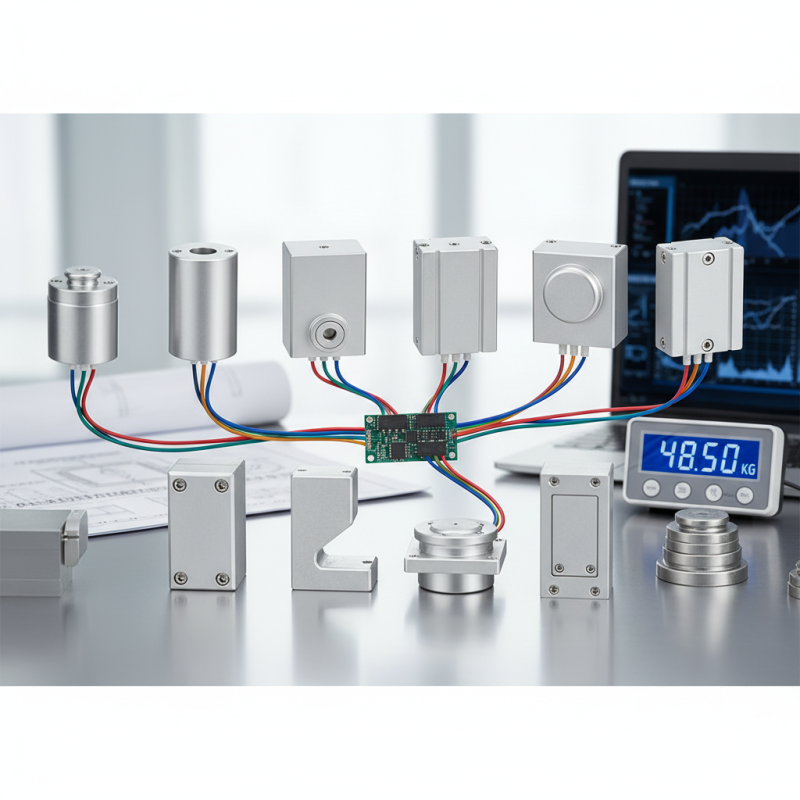
Overview of Load Sensors for 50kg Weight Measurement
Load sensors, also known as load cells, are essential components in various applications requiring accurate weight measurement, including industrial scales, medical devices, and shipping systems. When it comes to measuring weights up to 50kg, these sensors need to offer high precision, reliability, and durability. Load sensors operate by converting a mechanical force into an electrical signal, providing a clear indication of the weight being measured. They can come in various types—like strain gauge, piezoelectric, or capacitive—a feature that allows users to select the most appropriate one for their specific needs.
The performance of load sensors is influenced by several factors, including their material composition, design, and calibration methods. For accurate 50kg weight measurement, sensors should exhibit minimal hysteresis and linearity errors to ensure reliable readings across the measurement range. Additionally, environmental factors such as temperature fluctuations can affect sensitive measurements, making it vital for users to choose load sensors that offer temperature compensation or operate optimally across a range of conditions. Furthermore, ease of integration with other weighing components, such as displays and processing units, contributes significantly to the effectiveness of a load cell system in achieving accurate weight measurements.
Key Features to Consider When Choosing Load Sensors
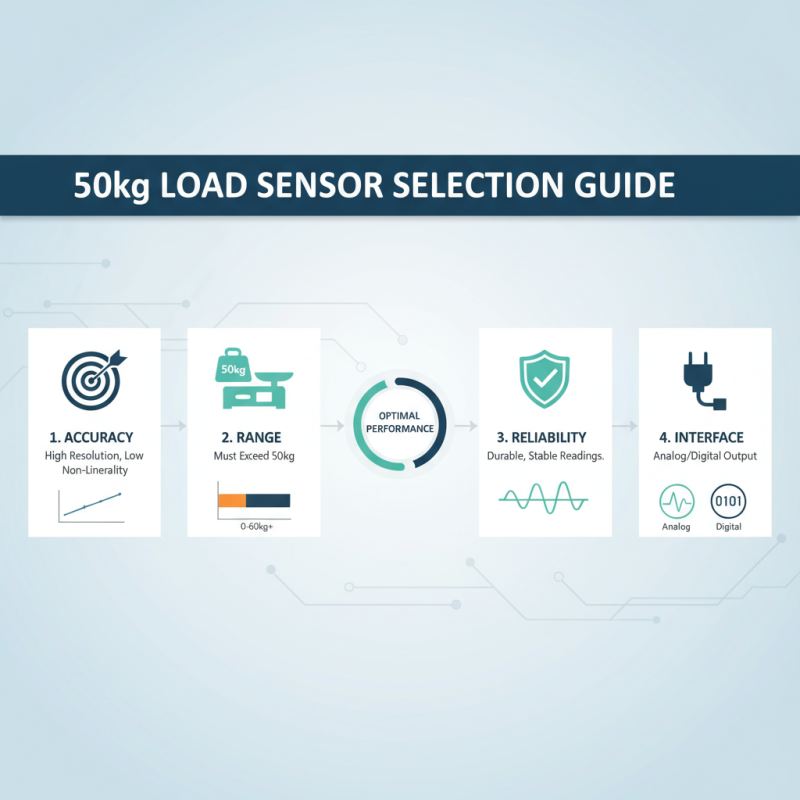
When selecting load sensors for 50kg weight measurement, several key features come into play to ensure optimal performance and reliability. First and foremost, accuracy is critical. The sensor's precision determines how closely its measurements align with actual weight, thus influencing the reliability of your data. Look for load sensors with a high resolution and low non-linearity errors, as these factors contribute significantly to the overall measurement accuracy. Additionally, the sensor's range must comfortably encompass the weight you intend to measure, ensuring it operates within its optimal capacity.
Another important consideration is the material and construction of the load sensor. The sensor should be made of durable materials that can withstand various environmental conditions, especially if it’s intended for use in industrial settings. Factors such as temperature sensitivity, resistance to corrosion, and shock absorption can impact the longevity and performance of the sensor. Moreover, compatibility with existing systems is crucial; check that the load sensor can easily integrate with your data acquisition and processing units. These features, combined with thorough calibration procedures, will ensure a dependable measurement system for your 50kg weight applications.
Top 10 Load Sensors Suitable for 50kg Measurement
When it comes to accurately measuring weights up to
50kg, selecting the right load sensor is
crucial for ensuring precision and
reliability in various applications. These sensors are
vital for fields ranging from industrial manufacturing to laboratory research, where even the
slightest error can lead to significant consequences. The optimal load sensors should exhibit
high accuracy, stable performance, and the ability to withstand various environmental conditions.
Among the most common types of load sensors for
50kg weight measurement are
strain gauge sensors, which utilize the strain theory to
deliver precise readings. These sensors are particularly valued for their ability to provide
linear output and can easily be integrated into digital weighing systems for enhanced
functionality.
Additionally, capacitive load sensors are gaining
popularity due to their high sensitivity and robustness in dynamic measuring environments, making
them suitable alternatives for high-traffic areas or mobile applications where reliability is key.
It is also essential to consider factors such as the sensor's
size,
weight, and
installation requirements when selecting the appropriate load sensor.
Moreover, emerging technologies, such as wireless load sensors,
are revolutionizing the market by offering real-time data transmission and enhanced monitoring capabilities.
Contemporary applications continue to expand the utility of load sensors, thereby reinforcing their
importance in achieving accurate weight measurements in a diverse range of settings.
Applications and Use Cases of Load Sensors in Weighing Systems
Load sensors play a critical role in various applications within weighing systems, providing precise measurements in a range of settings. One of the primary use cases for load sensors is in industrial scales, where they facilitate the accurate measurement of goods during manufacturing and logistics processes. This ensures that products meet required specifications and helps maintain compliance with industry regulations. Additionally, load sensors are essential in quality control applications, ensuring that products are not only within weight tolerances but also contributing to overall production efficiency.
Beyond industrial applications, load sensors are widely used in medical and health-related fields. They can be integrated into hospital beds to monitor patient weight, allowing for better healthcare management. Furthermore, in the fitness industry, load sensors are implemented in smart devices to track body weight and composition, aiding individuals in reaching their health goals. The versatility of load sensors makes them vital in both professional and personal contexts, demonstrating their significance in modern weighing systems across diverse sectors.
Top 10 Load Sensors for 50kg Weight Measurement
| Sensor Model |
Capacity (kg) |
Output Type |
Accuracy (%) |
Applications |
| Model A |
50 |
Analog |
0.1 |
Industrial Weighing |
| Model B |
50 |
Digital |
0.05 |
Food Industry |
| Model C |
50 |
Strain Gauge |
0.2 |
Laboratory Scales |
| Model D |
50 |
Analog |
0.1 |
Automotive Testing |
| Model E |
50 |
Digital |
0.1 |
Packaging Industry |
| Model F |
50 |
Strain Gauge |
0.15 |
Medical Equipment |
| Model G |
50 |
Analog |
0.2 |
Construction |
| Model H |
50 |
Digital |
0.1 |
Retail Weighing |
| Model I |
50 |
Strain Gauge |
0.1 |
Agricultural Weighing |
| Model J |
50 |
Digital |
0.1 |
Logistics |
Maintenance and Calibration Tips for Load Sensors
Maintaining and calibrating load sensors is crucial for ensuring accurate weight measurements, especially when working with sensitive applications. Regular maintenance helps identify potential issues before they escalate, improving both the reliability and lifespan of the sensors. This often includes cleaning the sensors to remove dust and debris that could interfere with readings, regularly checking connections for wear or corrosion, and ensuring that environmental conditions remain optimal for sensor performance.
Calibration is another essential aspect of load sensor management. It involves comparing the sensor's readings against a known standard and adjusting it to ensure accuracy. Depending on usage, load sensors should be calibrated periodically—ideally, before any critical measurements are taken. Documenting calibration dates and results can aid in maintaining compliance with industry standards, providing a clear record for quality assurance processes. Following these maintenance and calibration tips can significantly enhance the functionality and longevity of load sensors, ensuring they consistently provide precise weight measurements for loads up to 50 kg.
Top 10 Load Sensors for 50kg Weight Measurement
This bar chart displays the load capacity of the top 10 load sensors used for measuring weights up to 50kg. Proper maintenance and calibration tips enhance the performance of each sensor.

 sales@loadcellsensor.com