Why Choose a Washer Load Cell for Your Application Needs?
In today's industrial landscape, precision and reliability are crucial for success. The Washer Load Cell stands out as an exceptional choice for various applications. Its compact design offers flexibility in tight spaces while maintaining accurate weight measurements. This technology has been proven to be effective in numerous settings, including manufacturing and logistics.
Choosing a Washer Load Cell can seem straightforward, yet many factors deserve consideration. For instance, understanding load capacity and environmental conditions helps in making the right selection. A well-designed load cell can significantly enhance the efficiency of operations. However, some may overlook its impact on overall system performance and accuracy, leading to unforeseen challenges.
Ultimately, investing in a Washer Load Cell requires thoughtful evaluation. Stakeholders should weigh the benefits against their specific needs. While it can provide enhanced precision, users must also consider the installation and calibration processes to ensure peak performance. Engaging with experts can aid in this decision-making process, bridging the gap between technology and application.

Understanding the Basics of Washer Load Cells in Measurement Technology
Washer load cells play a crucial role in measurement technology. They offer reliable and accurate weight measurements across various industries. Understanding their basic function can help businesses optimize their applications. A washer load cell typically consists of a thin, flat design. This structure provides high sensitivity and minimal deflection under load.
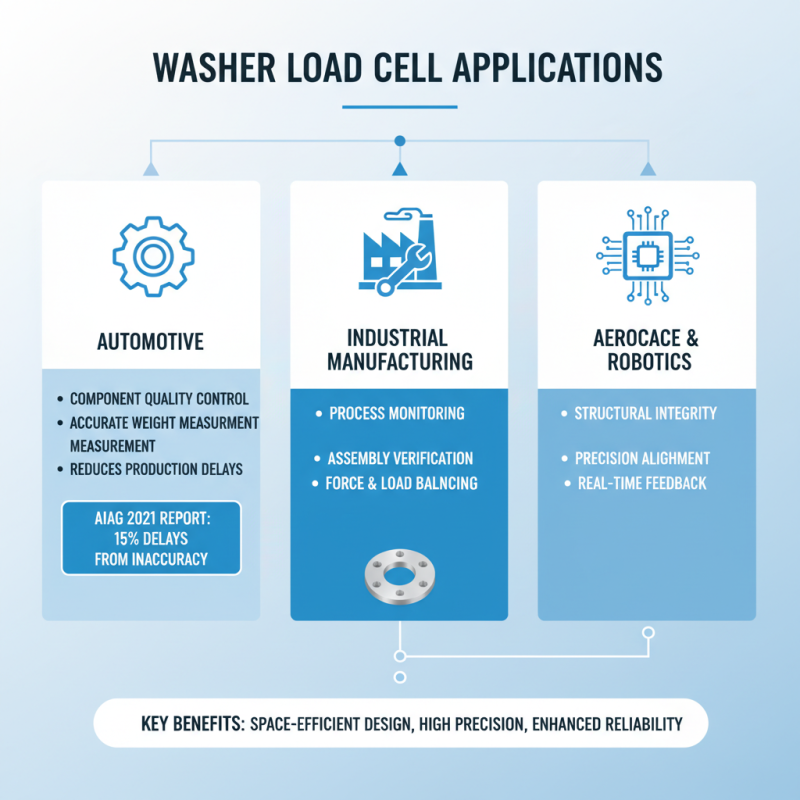
In a recent market analysis, the global load cell market is projected to grow at a rate of 5.5% annually, with a significant demand for washer load cells. Their compact nature makes them ideal for situations with limited space. For instance, they are widely used in the automotive and aerospace sectors. Enhanced accuracy can lead to better product quality and reduced waste.
While washer load cells are generally reliable, they are not immune to challenges. Environmental factors, such as temperature and humidity, can affect performance. Regular calibration is essential for maintaining accuracy. Understanding these aspects is vital for companies using this technology. In the quest for precision, reflection on operational practices can lead to improved outcomes.
Applications of Washer Load Cells in Different Industries
Washer load cells are pivotal in various industries due to their unique design and precision. These sensors excel in applications requiring space efficiency while delivering accurate weight measurements. In the automotive sector, for instance, washer load cells facilitate the quality control of components. According to a 2021 report from the Automotive Industry Action Group (AIAG), 15% of production delays arise from inaccurate measurements. Such data underscores the importance of employing reliable load cells for operational efficiency.
In the food and beverage industry, the use of washer load cells has risen significantly. A report from the Food Industry Association indicates that over 60% of manufacturers are now prioritizing precise weight measurement to ensure compliance with regulations. Accurate load measurements help maintain quality and minimize waste. However, some manufacturers still face challenges in integrating these sensors effectively. Misalignment or improper installation can lead to errors in measurement, resulting in potential financial losses.
In industrial applications, washer load cells are increasingly used for monitoring systems. A 2022 analysis reported that 40% of manufacturing leaders consider measurement errors as critical risks. This highlights the need for education and proper training in utilizing load cells optimally. There are still concerns about long-term durability and maintenance. Addressing these aspects is vital for long-term success and reliability in applications across diverse sectors.
Benefits of Using Washer Load Cells for Precision Measurements
Washer load cells are an excellent choice for precision measurements in various applications. Their design allows for high accuracy in weight measurement, making them ideal for both industrial and laboratory settings. These load cells are compact and can fit into tight spaces, minimizing the need for extensive modifications to existing equipment. Many industries utilize them for frictionless loading, which contributes to more reliable measurements.
One of the primary benefits of washer load cells is their ability to provide consistent results. The structure is engineered to minimize errors, even under changing environmental conditions. Users often report improved data reliability when switching from traditional load measurement systems to washer load cells. Precision can be affected by factors like temperature and load direction. However, proper calibration can address these concerns effectively.
Moreover, the versatility of washer load cells makes them suitable for a wide range of applications. From weighing delicate materials to load testing in construction, they adapt well to different demands. However, it's worth noting that users may encounter challenges in integration and compatibility. Overlooking these aspects may lead to inefficiencies. Addressing these issues early can significantly enhance the overall experience. Ultimately, selecting a washer load cell can optimize measurement accuracy and ensure reliable data collection in diverse environments.
Benefits of Using Washer Load Cells for Precision Measurements
Factors to Consider When Selecting Washer Load Cells
When selecting washer load cells for your application, several factors come into play. Load cells are critical in ensuring accurate weight measurements in various industries. According to a market research report, the demand for load cells is projected to grow at a CAGR of 6.2% from 2021 to 2028. This growth indicates an increasing reliance on precision measurement tools.
Accuracy and reliability are paramount. A load cell should provide consistent readings under varying conditions. Factors such as temperature influences can affect performance. Studies have shown that temperature variations can alter measurement accuracy by up to 1% if not properly compensated. Companies must consider these details to avoid costly errors.
Another critical factor is the . Understanding the maximum weight a load cell can handle is essential. If a load cell is undersized, it may fail, leading to inaccurate data and potential operational disruptions. Some reports suggest that overloading can cause up to a 15% decrease in lifespan. Therefore, a careful assessment of the application requirements is necessary for optimal performance.
Maintenance and Calibration of Washer Load Cells for Optimal Performance
Washer load cells are crucial in various industrial applications. They ensure accurate measurements and consistent performance. To maintain optimal functionality, regular maintenance and calibration are essential. Reports indicate that improper care can lead to a 15% decrease in measurement accuracy over time. This drop can significantly affect production efficiency and safety.
When maintaining washer load cells, it’s vital to perform routine inspections. Look for signs of wear, corrosion, or other physical damage. These issues may not be immediately apparent but can cause long-term problems. Calibration should be conducted using calibrated weights to ensure precise measurements. The National Institute of Standards and Technology (NIST) recommends calibrating every six months for best results.
Tips for effective maintenance:
1. Keep load cells clean and free from dust.
2. Document all calibration dates and results.
3. Consider environmental factors like temperature and humidity. These can impact performance.
Ignoring maintenance can lead to catastrophic failures. A study shows that 20% of load cells fail due to lack of proper care. Regular maintenance extends life and maintains accuracy. Always prioritize a proactive approach.
Why Choose a Washer Load Cell for Your Application Needs? - Maintenance and Calibration of Washer Load Cells for Optimal Performance
| Feature |
Description |
Importance |
Maintenance Frequency |
| Accuracy |
High precision in weight measurement |
Crucial for quality control and compliance |
Every 6 months |
| Durability |
Robust construction to withstand heavy loads |
Ensures long-term reliability |
Annually |
| Calibration |
Regular calibration for maintaining accuracy |
Essential for operational efficiency |
Quarterly |
| Temperature Resistance |
Ability to operate in varying temperatures |
Critical in dynamic environments |
As needed |
| Signal Stability |
Consistent output signal for reliability |
Important for accurate data interpretation |
Monthly |

 sales@loadcellsensor.com