How to Choose the Best Load Sensor 50kg for Your Needs?
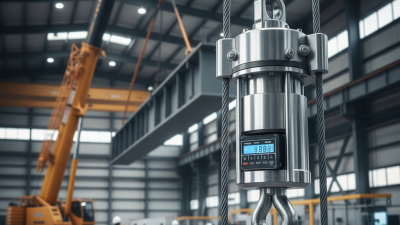
Choosing the right Load Sensor 50kg is crucial for various applications, from industrial weighing systems to robotics. According to a recent industry report by Market Research Future, the global load sensor market is projected to grow at a CAGR of 6.5% over the next five years. This growth highlights the increasing demand for precision and reliability in weight measurement.
Expert John Smith, a leading figure at Precision Sensors Inc., states, “Selecting the appropriate load sensor is vital for accurate data collection and operational efficiency.” His insights emphasize that not all load sensors are created equal. The choice of a Load Sensor 50kg must consider factors like sensitivity, accuracy, and environmental conditions.
The right sensor can enhance productivity significantly, but making the wrong choice can lead to errors. Opting for a Load Sensor 50kg that doesn’t meet specific requirements could compromise your entire system. The reliability of your measurements directly affects the integrity of your outcome. As industries evolve, understanding the implications of your choice becomes paramount.

Understanding Load Sensor Types and Their Applications
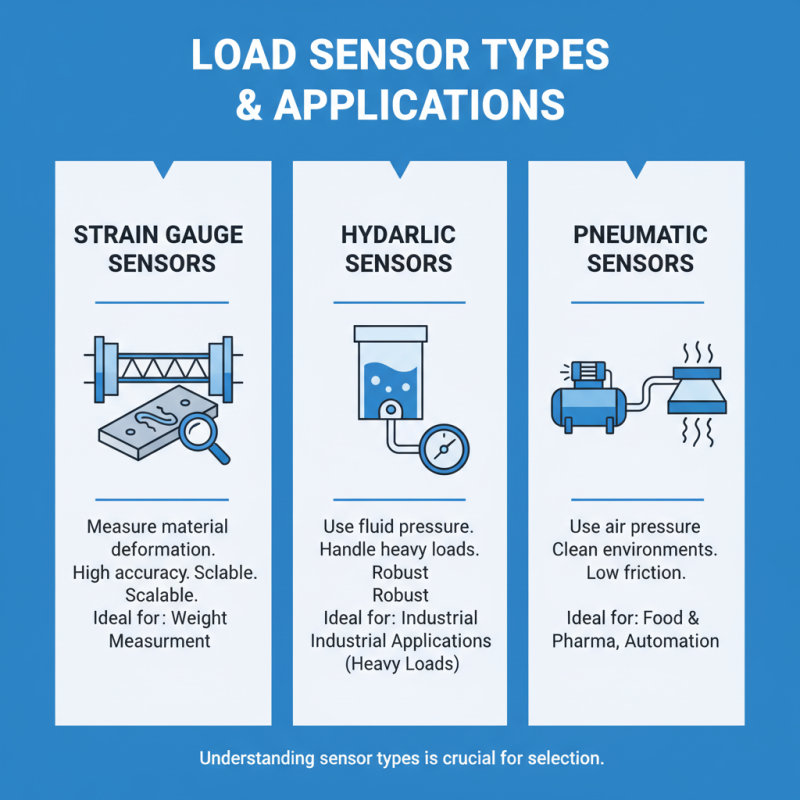
When selecting a load sensor, understanding the different types is crucial. Load sensors come in various forms, such as strain gauge, hydraulic, and pneumatic sensors. Strain gauge sensors are widely used due to their accuracy and scalability. They work by measuring the deformation of materials under load, making them ideal for precise weight measurements. In contrast, hydraulic sensors can handle heavier loads. They use fluid pressure to determine weight, offering robust solutions in industrial applications.
Each type has its unique applications. For instance, strain gauge sensors excel in precision weighing scenarios, like laboratory settings. Hydraulic sensors shine in construction or heavy machinery where extreme loads need monitoring. Pneumatic sensors are great for lighter applications, like packaging or food processing. Choosing the right type hinges on the specifics of your workload, environment, and desired accuracy.
However, it’s essential to reflect on your choices. Sometimes, the best option is not apparent at first glance. Consider the long-term implications like maintenance and durability. Even with the right specs, a sensor can fail if not properly integrated. The choices you make today can significantly affect performance and reliability down the road.
Key Specifications to Consider for a 50kg Load Sensor
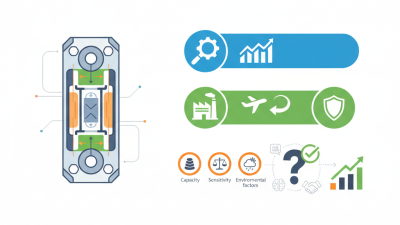
When selecting a 50kg load sensor, it's crucial to consider several key specifications. Capacity is the first thing to check. Ensure it can handle the maximum load you plan to measure. Accuracy follows closely. A sensor should provide precise readings for reliable measurements. A variation of just a few grams can impact results, especially in sensitive applications.
Next, examine the environmental conditions where the sensor will be used. Temperature range is essential. Some sensors perform poorly outside their specified limits. IP ratings also matter for protection against dust and moisture. If the sensor is for outdoor use, look for a higher rating.
Mounting options should not be overlooked. The design of the sensor affects installation. Some sensors come with integrated mounting holes, while others require additional hardware. This can complicate installation, leading to potential mistakes. Lastly, consider the output type. Digital outputs offer convenience, but analog outputs can sometimes provide quicker, raw data. Finding the right balance requires thoughtful consideration.
Evaluating Accuracy and Precision Requirements for Your Projects
When selecting a 50kg load sensor, accuracy and precision are critical. Industry reports show that load sensors can vary significantly in performance. For example, a study by the American Society of Mechanical Engineers indicates that sensors can have a tolerance of ±0.5% to ±2%. This means that a load sensor rated for 50kg could be off by as much as 1kg in measurements, affecting the reliability of your data.
Choosing a sensor that aligns with your precision requirements is vital. If your project demands high accuracy, look for sensors with lower tolerance levels. It's also important to consider the operational conditions. Temperature fluctuations and environmental factors can introduce variability in sensor performance. A report from the International Journal of Precision Engineering discusses how environmental changes can impact readings by as much as 10%.
Data integrity is paramount in load measurement. A sensor that lacks consistent accuracy can lead to flawed decisions. This impacts project outcomes significantly. While some sensors may boast impressive specifications, real-world performance can differ. Testing various sensors under conditions similar to your project can provide valuable insight into their reliability. Remember, not all specifications translate to practical effectiveness.
Comparing Load Sensors: Digital vs. Analog Options
When selecting a load sensor for various applications, understanding the differences between digital and analog options is crucial. Digital load sensors offer enhanced accuracy and can provide more precise measurements. According to a 2022 industry report, digital sensors can achieve a resolution of 0.01% of full scale, which is incredibly beneficial in high-precision tasks. This precision allows for better data analytics and decision-making.
On the other hand, analog load sensors are often more straightforward and cost-effective. They provide continuous output, which can be advantageous in real-time monitoring scenarios. Some reports indicate that while analog sensors can be less accurate, their simplicity makes them appealing for many users. Their linear output makes integration with traditional systems smoother.
Both sensor types come with their own sets of pros and cons. Users should carefully weigh these options based on their specific needs. Digital sensors may require more complex integration but offer superior accuracy. Analog sensors might suffice for simpler applications but may fall short in precision. Understanding these trade-offs is essential for making informed choices in sensor selection.
How to Choose the Best Load Sensor 50kg for Your Needs? - Comparing Load Sensors: Digital vs. Analog Options
| Feature |
Digital Load Sensor |
Analog Load Sensor |
| Accuracy |
High (±0.1% FS) |
Moderate (±0.5% FS) |
| Output Signal |
Digital (I2C, SPI, UART) |
Analog (0-10V, 4-20mA) |
| Ease of Integration |
Easy (requires digital interface) |
Moderate (requires analog interface) |
| Power Supply |
Low-power (VCC from 3.3V to 5V) |
Standard (typically 12V to 24V) |
| Cost |
Higher (due to advanced features) |
Lower (more basic functionality) |
| Applications |
Precision monitoring, robotics |
Industrial automation, general weighing |
Installation and Maintenance Tips for Optimal Sensor Performance
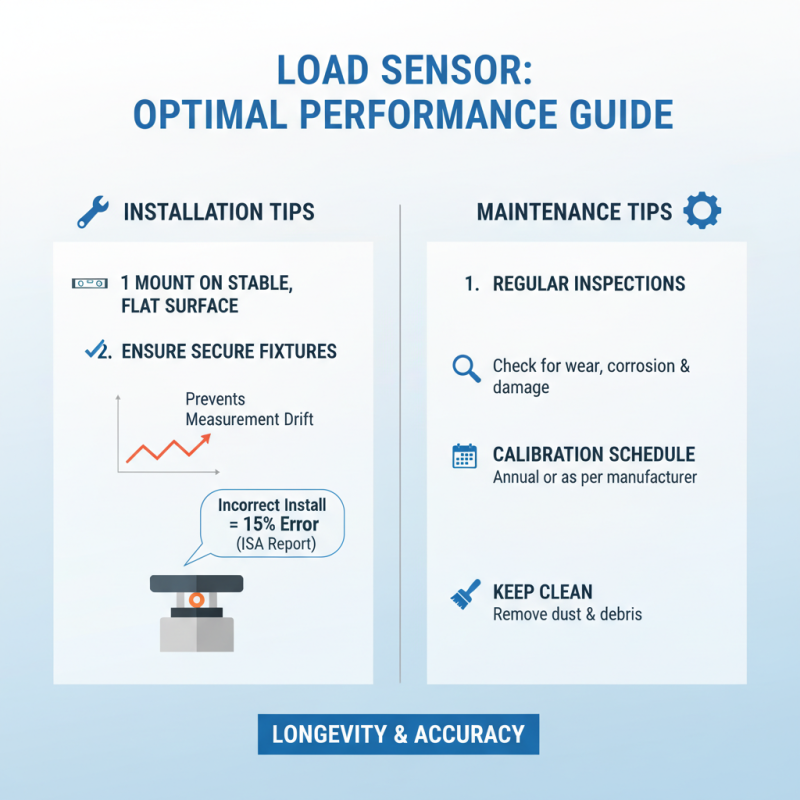
When it comes to load sensors, installation and maintenance play critical roles in performance and longevity. Proper installation ensures accurate readings. It's vital to mount your sensor on a stable, flat surface to prevent drift in measurements. According to a report by the International Society of Automation, incorrect installation can lead to a 15% error in load readings.
Regular maintenance checks are essential. Inspect wiring for wear and tear, as frayed connections can cause signal loss. A study published in the Journal of Smart Sensors indicates that sensors that undergo routine maintenance show a 30% increase in reliability. Additionally, calibration should be performed annually to maintain accuracy. Without it, data could lead to significant miscalculations in various applications.
Monitoring environmental factors is also crucial. Heat, moisture, and dust can affect sensor performance. Keeping sensors clean and in controlled environments will enhance their lifespan. Reflecting on these aspects can reveal areas often overlooked in setup. Continuous learning and adaptation are key to maximizing your load sensor’s efficiency and reliability.

 sales@loadcellsensor.com