
 sales@loadcellsensor.com


How to Choose the Best Wire Rope Load Cell in China?
Choosing the best Wire Rope Load Cell in China starts with the lifting task, not the supplier’s headline accuracy figure. What load will the rope carry? How does it run through the sensor? A compact cell can look suitable on a catalog page, yet fail to fit a crowded hoist assembly. Rope diameter, rated capacity, mounting geometry, and possible side loading all deserve careful checks.
Measurement pioneer Lord Kelvin wrote, “When you can measure what you are speaking about, and express it in numbers, you know something about it.” That principle is useful here. Ask suppliers for the rated range, accuracy conditions, overload limits, temperature range, and calibration documentation. Confirm whether the signal output works with your indicator or control system. Small details matter. A connector exposed to rain or a cable routed past moving steel can cause trouble long before the sensor reaches its limit.
Compare more than price. Check the manufacturer’s application experience, production quality controls, response time, and ability to explain installation limits in plain terms. Request drawings and verify the actual rope path against your equipment. A claim such as “high accuracy” is not enough without test conditions. I would also leave room for doubt: a neat specification sheet cannot prove how a sensor will behave on your particular rig. Ask practical questions, review the evidence, and choose a Wire Rope Load Cell that suits the real setup—not just the cleanest sales pitch.
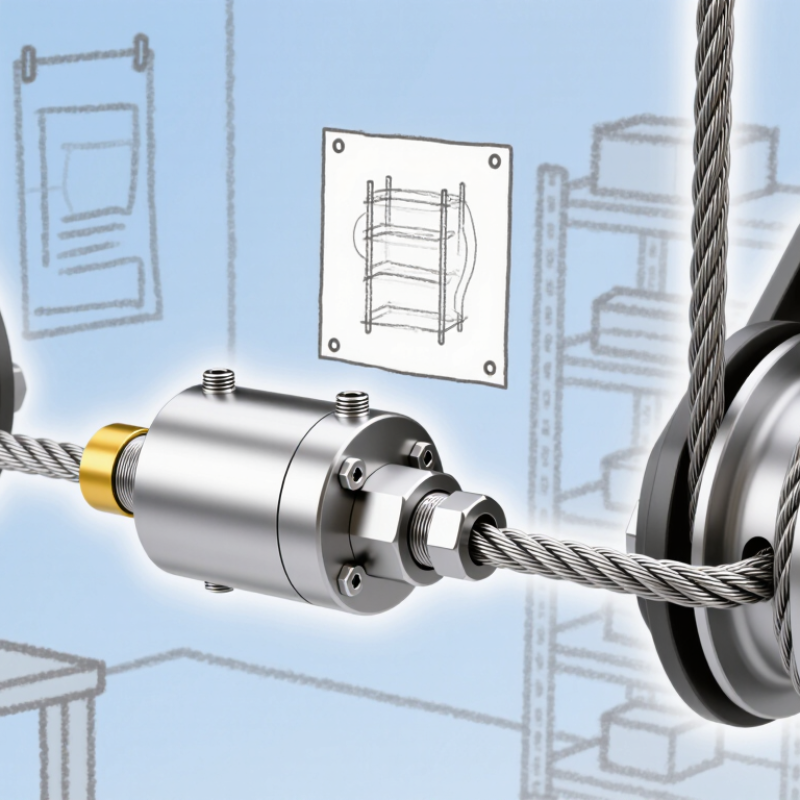
Table of Contents
[Hide]
Understand the Purpose and Operating Principle of a Wire Rope Load Cell
A wire rope load cell measures tension without cutting the rope or interrupting the lift. In a common clamp-on design, the rope rests against shaped contact points that slightly deflect it. This creates force inside the sensor body. Strain gauges bonded to that body deform with it, changing electrical resistance; a bridge circuit converts that change into a readable load signal. The exact relationship depends on rope diameter, construction, contact geometry, and installation. Small geometry changes matter. A tidy calibration sheet can still hide a poor rope fit.
Its purpose is to show whether a suspended load stays within the planned operating limit, not to replace sound rigging practice. ISO 376:2011 evaluates force-proving instruments using criteria including repeatability, reproducibility, and zero error—useful checks when assessing calibration quality. The U.S. Bureau of Labor Statistics recorded 5,283 fatal work injuries across all industries in 2023; this is not a lifting-only figure, but it reinforces the need for dependable load information. When comparing units made in China, confirm the rated range, display resolution, calibration traceability, and fit for the actual rope. Ask how readings change with rope angle and temperature, too. Field conditions are rarely as neat as a test bench.
| Selection Dimension | What to Check | Practical Guidance | Example or Key Note |
|---|---|---|---|
| Purpose and application | Identify what the instrument must measure and where it will be used. | Wire rope load cells are commonly used to monitor or measure tension in lifting ropes, hoists, cranes, winches, and test rigs. Confirm whether the need is continuous monitoring, a temporary test, or a safety-related alarm. | A monitoring installation may need a display or alarm output; a test setup may prioritize recorded measurement data. |
| Operating principle | Understand how the sensor converts rope force into an electrical signal. | Most models use strain gauges bonded to an elastic sensing element. Rope force deforms the element slightly; the strain gauges change resistance, and a Wheatstone bridge converts that change into a measurable signal. | The output depends on the sensor design, rope contact geometry, installation, and calibration. |
| Load capacity | Determine the highest expected working tension in the rope. | Select a rated capacity above the maximum measured working load, while keeping normal readings within a useful portion of the measurement range. Account for dynamic loads and load peaks using the equipment designer’s requirements and the sensor manufacturer’s limits. | Do not select capacity solely from the rope’s breaking strength. The rope’s breaking strength is not the normal operating load. |
| Load calculation | Estimate the tension at the sensor location, including load sharing and reeving. | For a stationary suspended mass, weight is approximately force = mass × 9.81 m/s². In a multi-part line, ideal static tension may be distributed among supporting rope parts, but friction, acceleration, and reeving geometry affect actual line tension. | A 1,000 kg mass has a weight of about 9.81 kN before accounting for system geometry or dynamic effects. |
| Rope compatibility | Check rope diameter, construction, lay, and the sensor’s specified contact range. | Confirm compatibility with the actual rope and the sensor’s groove, roller, or clamp arrangement. The rope should sit correctly in the intended contact points without pinching, slipping, or being forced into an unsuitable bend. | A sensor designed for one rope diameter or contact geometry may not give reliable results on a different configuration. |
| Installation and alignment | Review the mounting method, available space, and direction of rope travel. | Follow the manufacturer’s installation instructions. Keep the rope aligned with the sensing surfaces, secure the sensor correctly, and avoid unintended side loading or changes to the rope path. | Incorrect alignment or installation can cause measurement error and may affect the rope or sensor. |
| Accuracy and resolution | Compare the required measurement quality with the published specifications. | Check how accuracy is stated, such as as a percentage of full scale, and review resolution, repeatability, and calibration conditions. Compare specifications using the same basis rather than treating different accuracy definitions as equivalent. | For low loads measured by a high-capacity sensor, a given percentage of full scale can represent a relatively large absolute error. |
| Overload and dynamic conditions | Check allowable overload, shock-load limits, and the operating load profile. | Ask for both the safe operating range and the specified overload limits. Consider starts, stops, impacts, vibration, and load changes; do not assume that a stated overload limit permits routine operation above rated capacity. | Use the equipment’s engineering requirements and the sensor documentation to determine the necessary capacity margin. |
| Output and system interface | Match the sensor output to the display, controller, or data-acquisition system. | Confirm the required signal type, supply voltage, connector, cable length, and signal-conditioning requirements. Common options include bridge-level mV/V, 4–20 mA, voltage output, and digital interfaces, depending on the model. | Verify the complete signal chain, including any transmitter, indicator, alarm, or control input. |
| Environment and protection | Assess temperature, moisture, dust, corrosion, and outdoor exposure. | Choose a model with environmental protection suitable for the installation. Confirm its documented temperature range and ingress-protection rating, and check whether connectors and cables have equivalent protection. | An IP rating describes protection against dust and water under specified test conditions; it does not by itself establish suitability for every environment. |
| Calibration and documentation | Request calibration evidence and clear technical documentation. | Check the calibration range, test points, stated uncertainty or accuracy, serial identification, and calibration date. Confirm that the documentation corresponds to the delivered unit and its intended installation configuration. | For traceability, specify the calibration requirements and any applicable customer or industry requirements before ordering. |
| Safety and verification | Determine whether the device is for indication, testing, or a safety function. | Do not treat a measurement sensor as a certified safety device unless its documentation explicitly supports the required safety function. Verify the complete installation and use a qualified professional for lifting-system design and safety decisions. | Where required, confirm applicable regulations, standards, and certification directly with the equipment designer and supplier. |
Related Posts
-

Top Strategies for Selecting the Best 5kg Load Cell for Your Business Needs
-
Ensuring Excellence: Global Industry Standards for the Best Single Point Load Cells
-
Understanding the Benefits of Through Hole Load Cell for Accurate Measurements
-

How to Choose Load Sensors at the 139th Canton Fair?
-
Essential Tips for Choosing the Right Force Transducer?
-
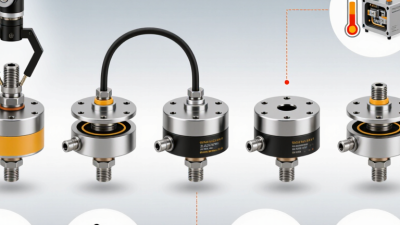
7 Best Inline Load Cells for Accurate Force Measurement