Leave Your Message
banner_21

China Top 10 Weight Sensor Manufacturers for Buyers?

Choosing among China’s leading Weight Sensor manufacturers requires more than comparing prices or polished catalogs. Buyers must check measurement range, accuracy, repeatability, materials, output signals, and compatibility with existing equipment. A sensor that performs well on a clean test bench may behave differently beside a vibrating conveyor or in a humid production room. Details matter.

Sensor engineer and author David S. Nyce has written about sensor principles and practical applications. A careful paraphrase of his measurement-focused approach is: “Select the sensing method for the real measurement task, then verify it in the working system.” Treat that as guidance, not a verbatim quotation. For buyers, this means asking manufacturers for calibration records, test conditions, and clear technical specifications. Ask how they handle overloads, temperature changes, and long-term drift. Request samples when the project allows. Small checks can prevent expensive surprises.

This guide introduces ten Chinese manufacturers for buyers to assess, not a universal ranking. It considers product range, customization, quality controls, communication, and support after delivery. No shortlist is perfect. Some suppliers may offer strong pricing but limited documentation; others may provide detailed engineering help at a higher cost. Verify claims independently, and compare like with like. A thoughtful choice starts with the application, not the headline price.

China Top 10 Weight Sensor Manufacturers for Buyers?

Weight Sensors Explained: Load Cells, Strain Gauges, and OIML R60 Classes

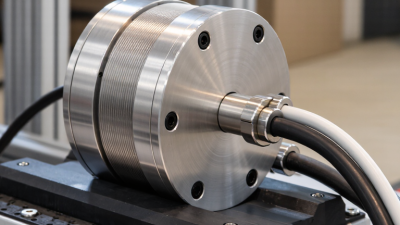
A load cell turns force into an electrical signal. In a common strain-gauge design, gauges bonded to a metal flexure change resistance as the flexure bends. A bridge circuit converts that change into a small millivolt output. Uneven mounting, side loads, and temperature shifts can affect readings. Real installation matters.

OIML R 60:2017 classifies load cells by metrological performance and sets a maximum of 10,000 verification scale intervals for class C. That figure is not a promise of accuracy in every setup. Buyers should compare the required divisions, minimum verification interval, rated capacity, and test results. Ask for documented repeatability, creep, and temperature-effect data under the intended operating conditions. A high class alone can mislead.

Tips: Match the cell’s capacity to the platform and expected load. Check cable routing and mounting surfaces; a small twist can create a noticeable error. Request calibration records traceable to recognized standards.

How to Shortlist China’s Top 10 Weight Sensor Manufacturers for Buyers

Shortlisting China’s top weight sensor manufacturers should begin with the measurement task, not a ranking. Define the load range, required accuracy, installation space, and operating conditions. A sensor mounted beneath a platform may face vibration, moisture, or uneven loading. Those details affect which design is suitable.

Ask each supplier for a datasheet showing rated capacity, sensitivity, repeatability, and temperature compensation. Request calibration records and sample test reports, then check whether the stated test conditions match your application. Ask how the manufacturer handles incoming material checks, production testing, and product traceability. Evidence beats broad claims. A short technical call can also reveal whether engineers understand your mounting and wiring requirements.

Compare shortlisted suppliers using the same sample specification. Check sample lead time, communication quality, customization limits, and after-sales support. For a high-volume project, ask about inspection procedures and how design changes are documented. Do not choose on price alone. I have seen buyers focus closely on accuracy figures, then overlook cable length or connector placement. That is an imperfect screening method, and it deserves a second look. Keep the shortlist provisional until samples have been tested under realistic loads and conditions.

China Top 10 Weight Sensor Manufacturers for Buyers? – How to Shortlist China’s Top 10 Weight Sensor Manufacturers for Buyers
No. Shortlisting Dimension What Buyers Should Check Useful Evidence Buyer Screening Guide
1 Product and application coverage Confirm whether the supplier makes the required load-cell types, such as single-point, shear-beam, bending-beam, compression, tension, or platform sensors. Current product catalogue, dimensional drawings, installation guidance, and application references. Shortlist suppliers whose product range matches the actual load direction, mounting arrangement, and weighing equipment.
2 Rated capacity and overload limits Check rated capacity, safe overload, ultimate overload, eccentric-load requirements, and the number of sensors used in the system. Datasheets, load diagrams, and written confirmation for the intended operating conditions. Select capacity for the complete system design, including dead load, uneven loading, and foreseeable shock loads; do not choose by maximum capacity alone.
3 Accuracy and metrological performance Compare specifications such as combined error, repeatability, creep, hysteresis, and temperature effect. Check the stated test conditions and units. Full technical datasheet and, where relevant, an OIML R 60 test certificate for the specific model and capacity. Compare like with like: an accuracy figure is meaningful only when its definition, range, and test conditions are stated.
4 Electrical output and compatibility Verify rated output, excitation voltage, input and output resistance, wiring, cable length, and compatibility with the indicator, transmitter, or PLC. Wiring diagram, electrical specifications, and a compatibility confirmation for the buyer’s equipment. Strain-gauge load cells commonly use a millivolt-per-volt output; confirm the actual model’s output and the receiving device’s input requirements.
5 Environmental protection Assess ingress protection, operating temperature, humidity, washdown exposure, condensation, and chemical or outdoor exposure. IP test documentation referencing IEC 60529, environmental ratings, and installation instructions for the offered model. Match the protection level to the installation environment and confirm that the rating applies to the complete sensor and cable entry.
6 Materials and construction Check sensing-element material, surface finish, sealing method, cable construction, and corrosion resistance for the application. Material specifications, product drawings, and confirmation of any food-contact or hygiene-related requirements, if applicable. Ask for the exact material grade and finish rather than relying on broad descriptions such as “stainless” or “waterproof.”
7 Calibration and traceability Determine whether calibration data is supplied, which parameters are recorded, and whether the calibration process is traceable to recognized standards. Sample calibration report, calibration procedure, and relevant laboratory accreditation details where claimed. Request a sample report for the same sensor type and clarify whether calibration is performed on each unit or by batch.
8 Quality management and consistency Review incoming-material controls, production testing, serial-number traceability, nonconformance handling, and change control. Quality-system certificate scope, inspection records, sample test reports, and documented corrective-action procedures. Verify certificates with the issuing body and confirm that the certified entity and scope correspond to the actual manufacturing operation.
9 Customization and engineering support Check support for custom capacity, dimensions, cable length, connectors, mounting features, output, and documentation. Written specification review, approved drawings, prototype plan, and change-control terms. Confirm engineering responsibility, prototype approval steps, tooling costs, and ownership of custom drawings before placing an order.
10 Commercial reliability and after-sales support Evaluate sample availability, quoted lead time, minimum order quantity, warranty terms, spare-parts support, and response process for failures. Formal quotation, warranty document, sample order, delivery history, and support contact or escalation process. Validate delivery and quality with a pilot order before committing to larger volumes; compare total cost, not unit price alone.
This table is a buyer’s evaluation framework, not a ranked list or a claim about specific manufacturers. Confirm model-specific specifications and certificates directly with each supplier before purchase.

Compare Capacity, Accuracy, and OIML R60 C3’s 3,000 Verification Intervals

When comparing weight sensors, capacity and accuracy must be considered together. A sensor rated far above the working load may lose useful measurement resolution, while an undersized unit can face overloads during filling or impact. Check the dead load, maximum product weight, and any force from vibration or uneven mounting. Small details matter.

OIML R60 C3 indicates a load cell class with up to 3,000 verification intervals. It is a useful benchmark, not a promise that every installed system will achieve the same performance. The indicator, wiring, mounting surface, temperature changes, and calibration all affect the final result. Ask suppliers for the rated capacity, minimum verification interval, and test data for the exact model. Then compare specifications under similar conditions.

A practical check is to test the sensor near the loads used most often, not only at full capacity. Record readings with a stable test weight, then repeat after installation. Simple, but revealing. A precise-looking datasheet can still leave questions about real-world repeatability. Buyers should allow time for those questions before choosing.

Check IP Ratings, Materials, Calibration, and IEC 60529 Test Conditions

China’s Top 10 Weight Sensor Manufacturers: Check IP Ratings, Materials, Calibration, and IEC 60529 Test Conditions

An IP code is useful only when buyers understand the test behind it. Under IEC 60529, IP6X testing assesses protection against dust ingress; the standard specifies circulating talcum powder at 2 kg/m³, with test duration dependent on enclosure conditions and potentially reaching eight hours. For IPX7, the commonly cited test involves temporary immersion at one metre for 30 minutes. That rating does not prove suitability for continuous immersion, pressure washing, or corrosive cleaning chemicals. Small details matter. Ask for the exact test setup, sample configuration, and certificate scope—not just an IP number on a datasheet.

Materials and calibration deserve the same scrutiny. Stainless steel may resist corrosion, but welds, cable entries, coatings, and seals can still become failure points in a damp production room. Match the sensor’s wetted surfaces and sealing materials to the actual cleaners, temperature swings, and mounting method. For calibration, NIST metrology guidance emphasizes documented traceability and measurement uncertainty. Request calibration results across the intended operating range, not only a single-point check. A polished certificate can still leave a blind spot: installation stress and uneven load distribution may shift readings after commissioning. Ask suppliers how they control those effects, and review the test conditions before comparing manufacturers.

Assess Pricing, Lead Times, Certifications, and After-Sales Support Before Buying

When comparing China’s top 10 weight sensor manufacturers, ask for a like-for-like quotation. Include the sensor, amplifier, cable length, calibration, packaging, shipping, and spare parts. A low unit price can hide costly extras. Grand View Research’s Load Cell Market report estimated the global market at about USD 2.3 billion in 2023, with projected annual growth of 4.6% through 2030. That growth makes supplier capacity worth checking, not assuming. Request separate sample and bulk-production lead times, plus the date when the clock starts. Ask whether quoted delivery includes inspection and export packing. Get the answer in writing.

Certifications should match the sensor’s actual use. Check quality-system documents, calibration traceability, and whether the calibration laboratory holds ISO/IEC 17025 accreditation. Verify certificate scope and expiry dates; a logo alone proves little. For after-sales support, ask who handles technical questions, expected response times, warranty exclusions, and replacement-part availability. Request a sample calibration report and a clear process for investigating unstable readings. Small details matter. A response that promises “fast support” is not measurable, and paperwork cannot guarantee consistent performance. Compare the evidence, then test a sample under your real load, temperature, and mounting conditions before approving a large order.