
 sales@loadcellsensor.com


Top 10 Rigging Load Cells for Global Buyers
Choosing a Rigging Load Cell is not a catalog exercise. A clear display matters, but so do capacity, accuracy, connection type, environmental protection, and compatibility with the rest of the lifting system. A unit that fits a spreadsheet may be awkward beneath a hook or difficult to read in bright sunlight. Small details matter.
Rigging engineer and author David Duerr is known for his work on rigging engineering. A fair paraphrase of the practical mindset behind that work is: “Evaluate the complete load path, not just the instrument.” This is an editorial paraphrase, not a verified direct quotation. It reflects an important buying principle: a load cell measures force, but its value depends on proper selection, installation, and use. Buyers should confirm specifications with the manufacturer and involve qualified personnel when evaluating a lifting setup.
This guide compares ten options for global buyers. It considers rated capacity, readability, data features, durability, and support for different operating conditions. A muddy jobsite, a salt-air dock, and a clean factory floor can place very different demands on equipment. No single model suits every lift. Some product information may also be incomplete or change over time, so verify current specifications before purchase. The goal is a more informed shortlist, not a substitute for a lift assessment.
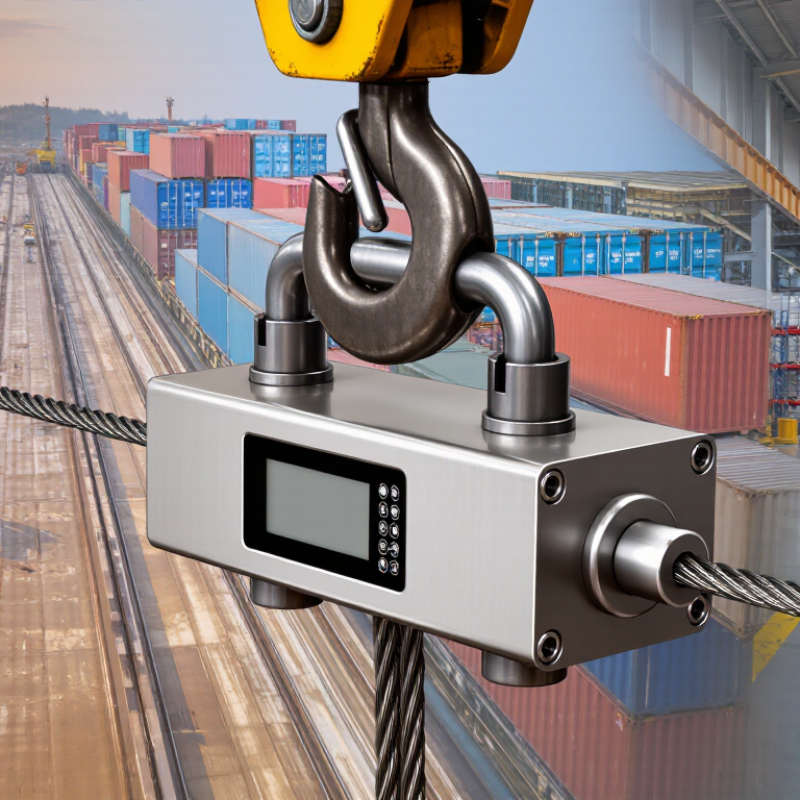
Table of Contents
[Hide]
What Rigging Load Cells Measure and How They Work
Top 10 Rigging Load Cells for Global Buyers
What Rigging Load Cells Measure and How They Work
A rigging load cell measures force in a lifting connection. It shows how much tension passes through a point, such as a hoist line or lifting shackle. Readings commonly appear in kilograms, pounds, or kilonewtons. These units describe force or load, but they are not interchangeable without conversion. That detail matters when crews compare readings with equipment ratings.
Many load cells use strain gauges bonded to a metal body. Under load, the body flexes slightly, changing the gauges’ electrical resistance. Internal electronics convert that change into a reading on a display or connected monitoring system. Some models measure force along an inline connection; others use a pin or shackle design. Fit and alignment matter. Side loading can distort a reading, even when the display looks steady.
A displayed value is useful, not infallible. Check the device’s rated capacity, condition, and calibration status before use, and keep the load within its specified range. Sudden movement can create forces higher than a static reading suggests. A quiet screen does not prove a lift is safe. In practice, operators should also confirm the rigging arrangement and watch for uneven loading. A small setup error can make a precise instrument misleading.
| Rank | Load Cell Type | What It Measures | How It Works | Typical Rigging Use | Key Selection Check |
|---|---|---|---|---|---|
| 1 | Instrumented Load Pin | Force transferred through a pin, usually in tension or shear. | Strain gauges inside or on the pin detect small elastic deformation and convert it into an electrical signal. | Crane blocks, pulley systems, lifting points, and custom rigging assemblies. | Pin dimensions, loading direction, support geometry, and protection against side loads. |
| 2 | Load-Measuring Shackle | Tensile force in a shackle connection. | A strain-gauged shackle pin measures deformation as load passes through the pin; readings may be shown on a wired or wireless indicator. | Proof-load monitoring, offshore lifts, and temporary lifting arrangements. | Rated capacity, pin fit, bow clearance, connection alignment, and applicable lifting procedures. |
| 3 | Tension Link Load Cell | Direct tensile force along the link’s main axis. | Strain gauges measure deformation in a purpose-designed metal body connected between two rigging points. | Suspended-load monitoring, mooring lines, and hoist or winch testing. | End-connection compatibility, axial alignment, overload protection, and available headroom. |
| 4 | Inline Tension Load Cell | Tension in a rope, cable, chain, or other in-line connection. | An elastic sensing element deforms under axial force; strain gauges convert that deformation into a measurable signal. | Winch pulls, cable tension checks, and static or moving line-load monitoring. | Connection type, line angle, dynamic loading, and whether the reading is required continuously. |
| 5 | Compression Load Cell | Compressive force applied through its loading faces. | Compression causes a small, reversible change in the sensing body; strain gauges measure the resulting strain. | Jack tests, load supports, presses, and compression checks in lifting equipment. | Flat, centered loading; mounting stability; and protection from bending or impact. |
| 6 | Low-Profile (Pancake) Load Cell | Axial tension or compression, depending on its design and installation. | A short, wide elastic body with strain gauges measures deformation along its calibrated force axis. | Test rigs and lifting setups with limited vertical clearance. | Available installation space, load introduction, alignment, and required force direction. |
| 7 | S-Beam Load Cell | Tension or compression along the central axis. | The S-shaped body flexes slightly under load; bonded strain gauges detect the deformation. | Hanging load checks, suspended hoppers, and general force measurement in a controlled setup. | Correct threaded connections, alignment, and suitability for shock or outdoor exposure. |
| 8 | Wireless Load Cell System | The force measured by its underlying load-cell sensor, transmitted wirelessly to a receiver or display. | A strain-gauge sensor converts deformation to an electrical signal; a transmitter sends readings to a compatible receiver. | Remote observation where cables are inconvenient or create a trip or snag hazard. | Radio range, local regulations, battery life, signal reliability, and the sensor’s rated capacity. |
| 9 | Crane Scale / Suspended Force Indicator | Suspended load force, commonly displayed as force or an equivalent mass unit. | An internal force sensor measures load-induced strain, and electronics display the calculated reading. | Overhead lifting and suspended-load checks where a direct-reading indicator is useful. | Rated capacity, display visibility, lifting-point compatibility, and whether the unit is approved for the intended use. |
| 10 | Multi-Axis Load Cell | Force in more than one direction and, on some designs, moments about one or more axes. | Multiple sensing elements or strain-gauge bridges resolve applied loads into separate calibrated channels. | Complex test rigs, load-path studies, and applications where off-axis forces must be measured. | Number of measurement axes, cross-talk performance, installation orientation, and calibration requirements. |
How rigging load cells work: Most use strain gauges bonded to an elastic metal sensing element. Applied force causes a small deformation, changing the gauges’ electrical resistance; the instrument converts this change into a force reading. Capacity, accuracy, environmental rating, and allowable loading vary by model and installation. Select equipment for the intended load direction and follow the manufacturer’s instructions and applicable lifting regulations.
Related Posts
-
How to Choose the Best Wire Rope Load Cell in China?
-
How to Choose a Rigging Load Cell?
-

Top Strategies for Selecting the Best 5kg Load Cell for Your Business Needs
-
Ensuring Excellence: Global Industry Standards for the Best Single Point Load Cells
-
Understanding the Benefits of Through Hole Load Cell for Accurate Measurements
-

How to Choose Load Sensors at the 139th Canton Fair?