Best Round Force Sensor in 2026 What Buyers Need to Know?
Choosing the best Round Force Sensor in 2026 starts with the job it must perform, not a product ranking. A sensor measuring a light press on a compact assembly faces different demands from one monitoring repeated loads on a test fixture. Define the expected force range, measurement direction, available mounting space, and operating environment before comparing models. Small details matter. A bolt pattern that misses by a few millimeters can turn a promising sensor into a difficult installation.
Buyers should review rated capacity, sensitivity, accuracy, overload limits, output type, and calibration documentation. Check whether the sensor’s specifications match the complete measurement chain, including the amplifier, cabling, and data acquisition system. For a production line, response time and repeatability may matter most; for laboratory work, traceability and low-force resolution may take priority. Ask suppliers how performance was verified and whether they can provide application guidance. A polished datasheet helps, but it cannot replace a clear test plan.
There is no universal winner. Not really. A lower-cost model may be suitable for occasional checks, while demanding continuous use may justify stronger environmental protection or a more robust mounting design. Consider temperature, vibration, dust, and the risk of off-axis loading. These conditions can affect readings in ways that are easy to underestimate. This guide explains the practical trade-offs buyers should examine in 2026, so they can shortlist a Round Force Sensor based on evidence, fit, and support—not specifications alone. Some choices remain application-specific, and that deserves honest attention.
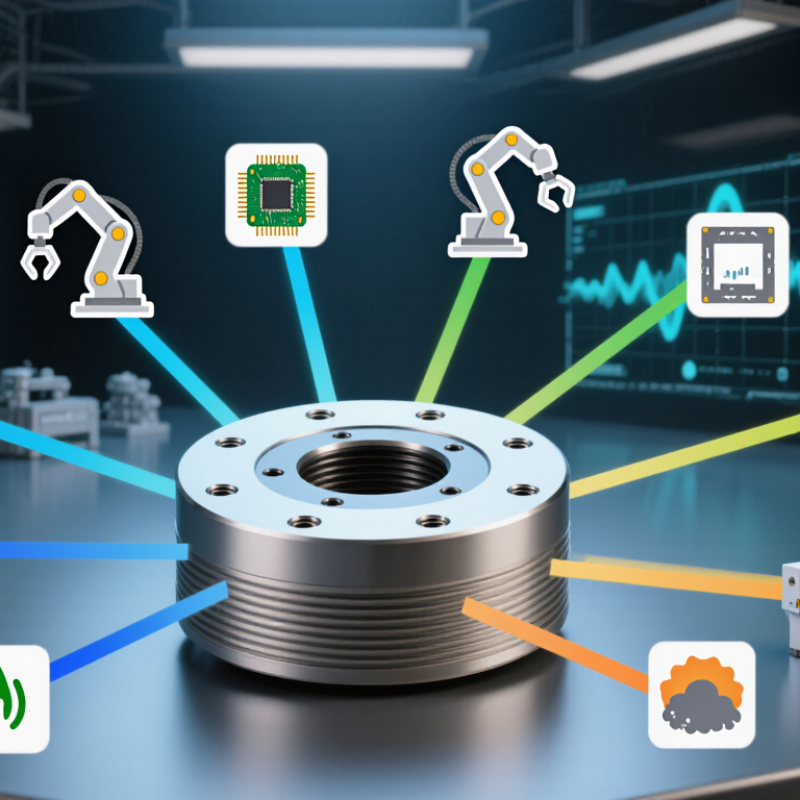
Round Force Sensors Explained: Compression, Tension, and Load-Path Design
Round force sensors measure load along a defined axis, but their round shape does not guarantee accurate readings. In compression, force pushes through the sensing face into a stable support. A flat contact surface helps distribute the load evenly. A tilted platen can introduce side force and bending, which may distort the result. Small errors matter.
Tension applications need a secure, centered connection so the sensor carries a pulling force without twisting. Check the mounting hardware and load path together: the force should travel through the sensor, not through a bracket edge or nearby frame. In practical setups, slight misalignment can appear only after the fixture is tightened. That detail is easy to overlook.
Choose capacity with the real operating range in mind, including brief peaks, while avoiding a sensor so oversized that normal changes become hard to resolve. Follow the manufacturer’s mounting and calibration guidance, and verify readings with a known reference load when accuracy matters. Keep cables clear of moving parts, too. A tidy cable route will not fix a poor load path, but it can prevent avoidable interruptions. The fixture is often the weak link, and it deserves inspection as carefully as the sensor.
Compare Capacity, Overload Limits, and the Common 2 mV/V Output
Best Round Force Sensor in 2026: What Buyers Need to Know?
Choosing a round force sensor starts with its capacity. Match the rated range to the largest expected load, including brief peaks during startup or impact. A sensor rated far above your normal force may provide less useful resolution. Too little capacity risks overload. Check the datasheet for measurement range, accuracy, and recommended mounting conditions. Small details matter.
Overload limits need careful reading. Safe overload describes a temporary load the sensor can withstand without permanent damage; it does not mean the sensor can measure accurately at that load. Ultimate overload may indicate a damage threshold. Leave a margin for unexpected peaks, and avoid side loads or uneven contact. These can distort readings even when the stated capacity is not exceeded. It is easy to overlook them. The common 2 mV/V output is sensitivity at rated load. With 10 V excitation, full-scale output is about 20 mV. Confirm your amplifier can measure this small signal reliably.
Tips: Compare the rated capacity and overload specifications side by side. Verify output at your actual excitation voltage, then check calibration with a known load. A neat datasheet cannot replace a careful installation. Sometimes the setup is the weak link.
Assess Calibration Needs Using ISO 376 Classes 00, 0.5, 1, and 2
Best Round Force Sensor in 2026: What Buyers Need to Know?
A round force sensor’s calibration class matters when results must be traceable and comparable. ISO 376 classifies force-proving instruments, not an isolated sensor in every possible setup. Class 00 sets the tightest performance requirements, followed by 0.5, 1, and 2. The right choice depends on the required measurement quality and how the instrument will be used. A sensor used to verify a testing machine may need a more demanding class than one used for routine process checks.
Check the full calibration conditions before comparing specifications. Range, loading direction, mounting surfaces, and alignment can affect readings. A small tilt or uneven contact can introduce errors, even with a high-class instrument. Calibration should reflect the intended setup and operating range. Buyers should also review the calibration certificate and confirm that its uncertainty suits their measurement needs. A tighter class can add cost without improving a setup whose mounting or handling is inconsistent.
Tips: Keep the sensor centered between flat, clean loading faces, and avoid side loads. Ask which ISO 376 criteria were assessed and under what conditions. Recheck calibration after overloads or major setup changes. One practical caveat: real installations are rarely perfect, so allow time to inspect alignment and repeat measurements rather than relying on the class label alone.
Match Sensor Materials, Mounting, and IP Ratings to the Application
A round force sensor can look simple, but its material must suit the working environment. Stainless steel is often chosen for washdown areas or humid rooms because it resists corrosion better than many common metals. Aluminum can reduce moving mass, though it may be less suitable for harsh exposure. Check the sensor’s specified capacity and overload limits, not just its outer diameter. Small details matter.
Mounting affects readings as much as material. Keep the sensor centered in the load path, and use flat, clean contact surfaces. A tilted fixture or uneven bolt tightening can introduce side loads and distort results. Follow the specified mounting method and torque values; do not assume a thicker plate solves every alignment problem. In practice, this is where a neat drawing can mislead.
IP ratings describe protection against dust and water under defined test conditions. They do not guarantee resistance to cleaning chemicals, corrosion, or every washdown pattern. Match the rating to the actual exposure, including spray direction and how often cleaning occurs. Check the connector and cable entry, too; the sensor body may be sealed while its connection needs careful routing. After installation, compare readings under a known load. It takes a little time. But it can reveal a poor fit before measurements become unreliable.
Check Signal Compatibility, Calibration Records, and Total Ownership Cost
Best Round Force Sensor in 2026: What Buyers Need to Know?
A round force sensor may fit neatly under a test fixture, but its signal must also match your equipment. Check whether the output is millivolt, voltage, or digital, and confirm the required excitation and connector details. A mismatch can mean extra hardware, noisy readings, or a stalled installation. Small details matter. Compare the sensor’s capacity and overload rating with real operating forces, not just the expected average. A generous margin helps, but oversizing can reduce useful measurement resolution.
Ask for calibration records that identify the sensor, calibration date, test points, and traceability. Check whether the documented range matches your actual working range. A certificate alone does not guarantee good results if mounting surfaces are uneven or cables are strained. That part is easy to overlook. For total ownership cost, include installation, signal conditioning, recalibration, downtime, and replacement access. The lowest purchase price may not stay lowest after repeated setup changes.
Tips: Before ordering, share your wiring diagram and mounting sketch with the supplier. Confirm lead time for recalibration and request a sample record. Keep one spare cable on hand; connectors sometimes fail before the sensor does.

 sales@loadcellsensor.com